Attributes & Emblems
How to Recognise a Saint
Western painting identified its saints by object, not by label. A viewer who could not read a name plate could still name the figure in the panel, because the figure carried the thing that killed her, the animal that served him, or the tool of his trade. The attribute is what makes a crowded altarpiece legible: six women in the same red robe become Catherine, Barbara, Lucy, Agnes, Apollonia and Cecilia the moment you look at what each one is holding. This index groups the collection by that emblem rather than by name, which is how the pictures were meant to be read.
Attributes · 1 of 6
The Four Symbols
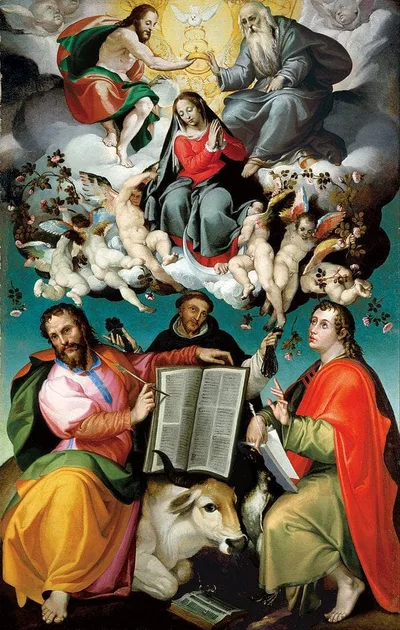
Matthew's angel, Mark's lion, Luke's ox, John's eagle — the evangelists identified by the creature beside them.
The four evangelists were given the four living creatures of Ezekiel's vision and of Revelation: a winged man for Matthew, a lion for Mark, an ox for Luke, an eagle for John. The pairing was fixed by the fourth century and stayed fixed for a thousand years, which is why the creature alone is enough — it appears in manuscript corners, on pulpit panels and in the spandrels of domes with no name attached, and the arrangement still reads.
Attributes · 2 of 6
The Keys and the Sword
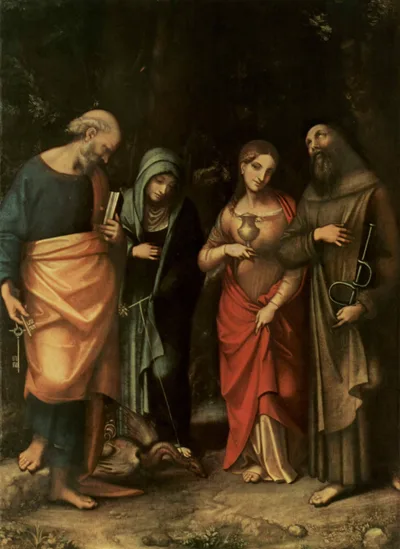
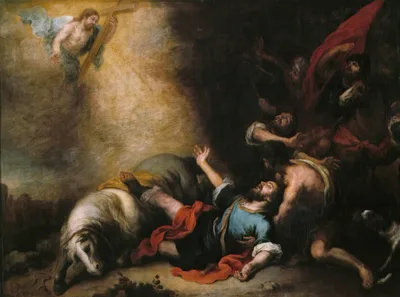
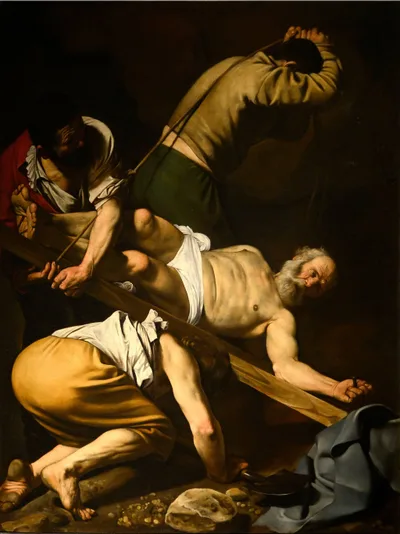
Peter with the keys of the kingdom and Paul with the sword of his beheading, the two princes of the apostles.
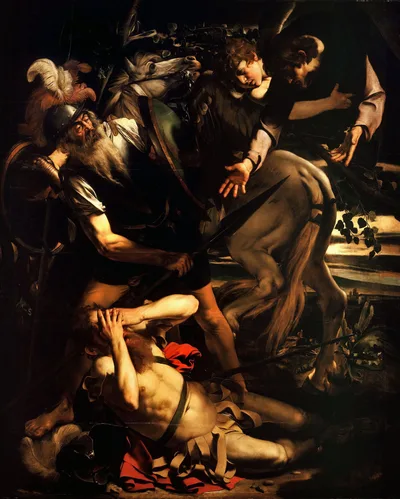
Peter holds keys because of the promise of the keys of the kingdom; Paul holds a sword because he was beheaded, and because of the sword of the spirit. The two are usually painted as a contrasting pair — Peter older, broad-faced and white-bearded, Paul balding with a long dark beard — so that a viewer could tell them apart at the far end of a nave, before any object was visible at all.
Attributes · 3 of 6
The Wheel and the Palm
Virgin martyrs carrying the instrument that killed them: Catherine's wheel, Barbara's tower, Lucy's eyes, Agnes's lamb.
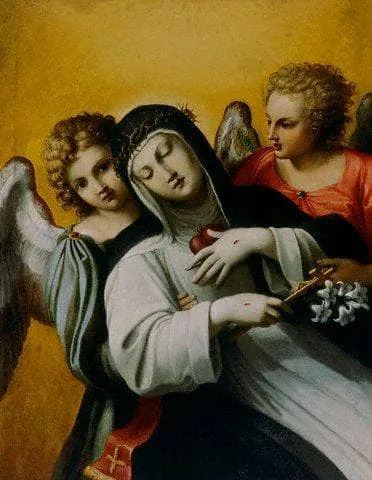
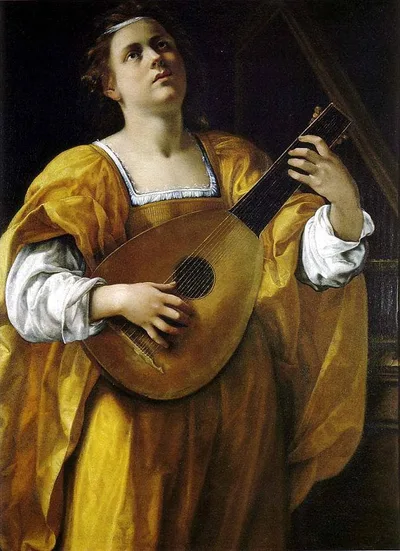
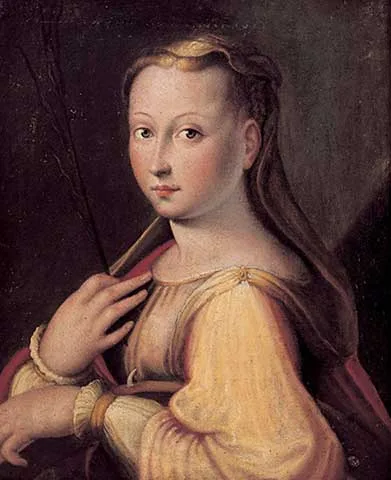
The virgin martyrs carry the instrument of their own death: Catherine the spiked wheel, Barbara the tower she was shut in, Agnes a lamb for her name, Lucy her eyes on a dish, Apollonia the pincers that took her teeth, Cecilia an organ. The palm branch is common to all of them and marks martyrdom itself. In a group of saints the palm tells you what happened; the object tells you to whom.
Attributes · 4 of 6
The Arrows
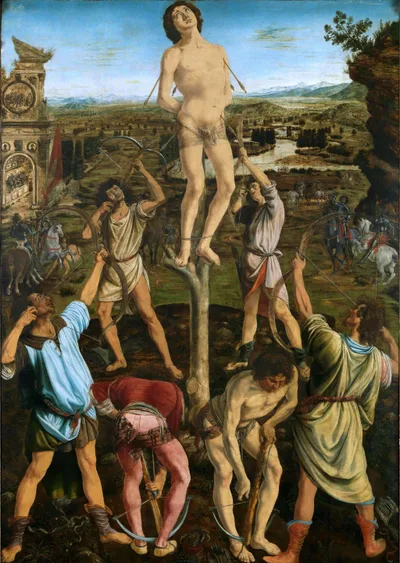
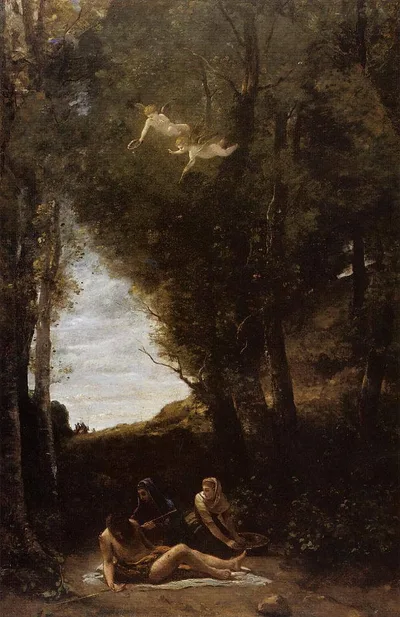
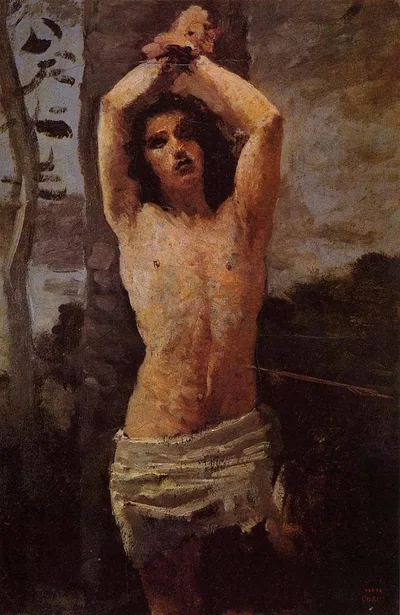
Sebastian bound and pierced, and Roch showing his wound — the two saints a city prayed to when plague arrived.
Sebastian, tied to a column and stuck with arrows, and Roch, lifting his tunic to show the sore on his thigh, are the two saints a city commissioned when plague arrived. The arrow was read as the disease striking from above, and Sebastian survived his; that survival is the reason he is on so many altarpieces in so many plague years. The images are votive before they are decorative — they were paid for in an emergency.
Attributes · 5 of 6
The Desert and the Lion
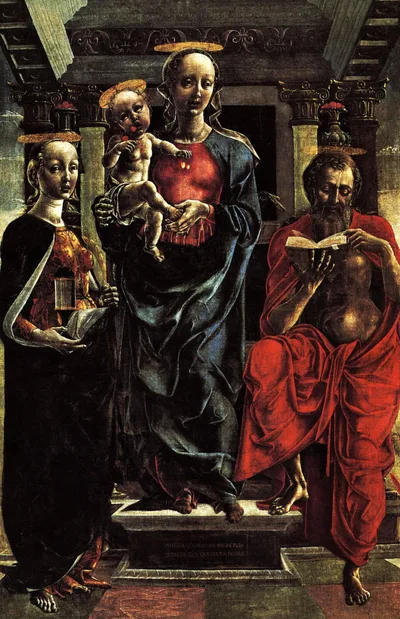
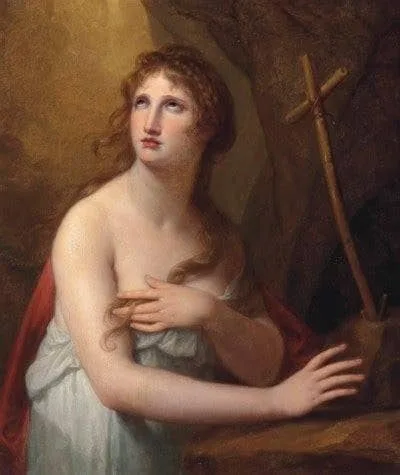
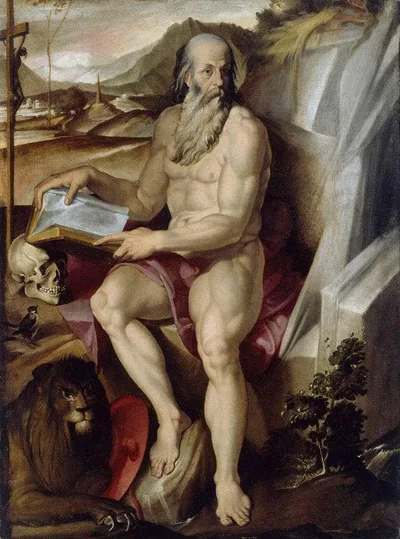
Hermits in the wilderness with skull, book and tamed beast: Jerome, Anthony, Paul the Hermit, Mary of Egypt.
The hermit saints are painted with a landscape rather than a crowd: rock, cave, book, skull, and an animal that has stopped being dangerous. Jerome has the lion whose paw he healed and the red hat of a cardinal he never wore; Anthony has the pig and the demons of his temptation; Mary of Egypt has her own hair for clothing. The subject is solitude, and the wilderness in these pictures is doing as much work as the figure.
Attributes · 6 of 6
The Dragon Underfoot
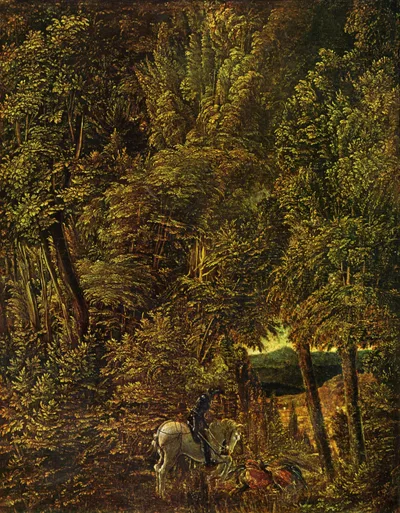
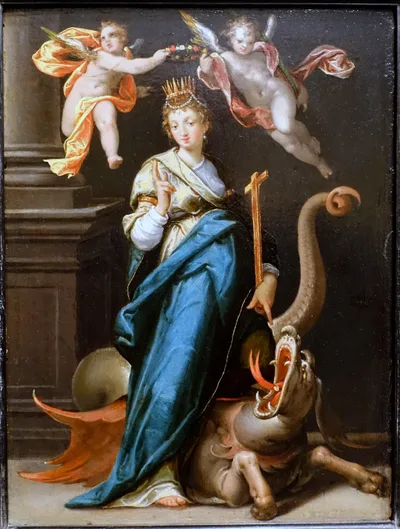
George on horseback, Margaret rising from the beast, Martha leading it on a cord — the dragon as defeated evil.
George on a horse with a lance, Margaret stepping out of the beast that swallowed her, Martha leading hers on a ribbon: the dragon is evil already defeated, which is why it is so often small, and underfoot, and painted with the care given to a lizard rather than the fear given to a monster. The princess in the background of the George stories is a narrative fixture, not a portrait.