Hand-painted in oil
About this Artwork
The lion in the study
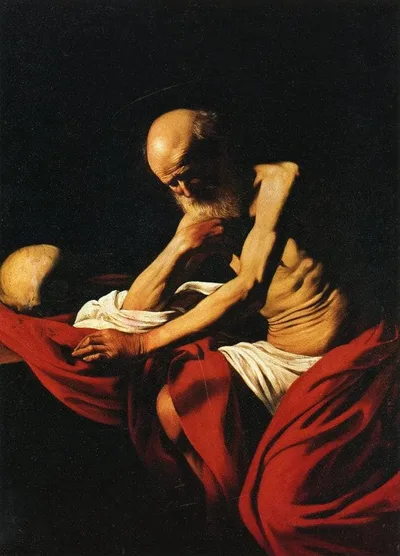
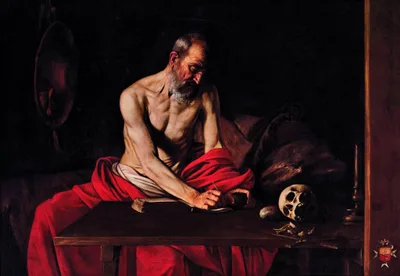
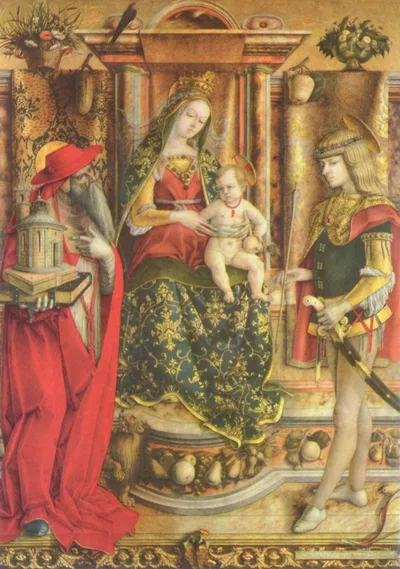
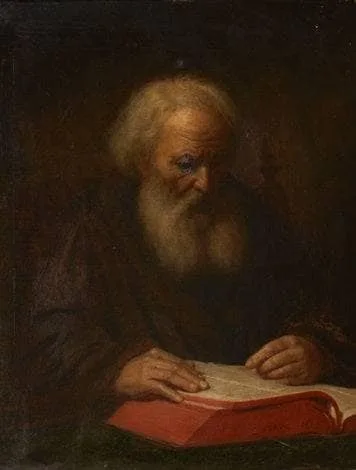
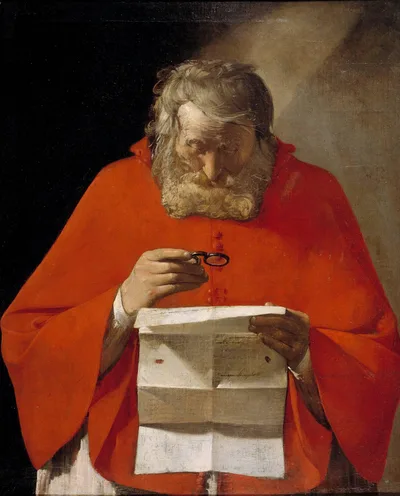
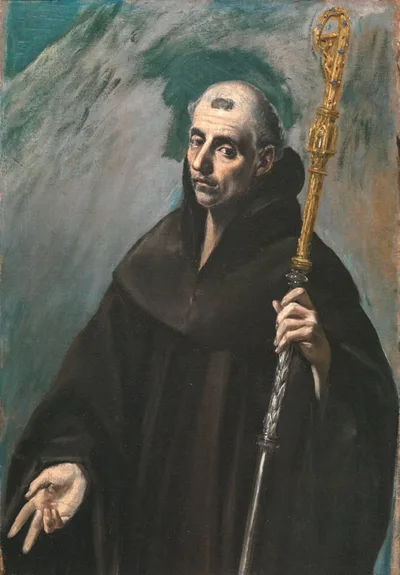
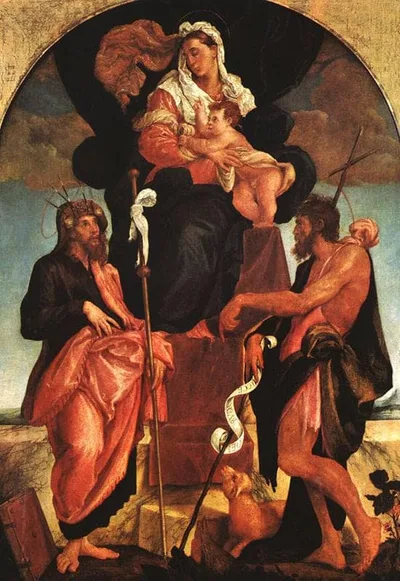
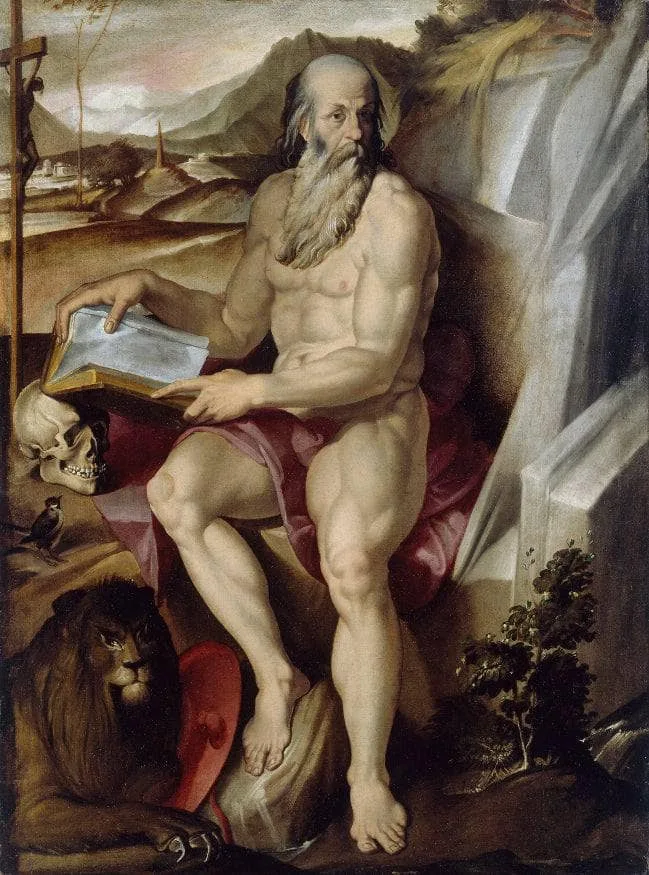
Jerome carries more attributes than almost any other saint: a book and a pen, a skull, a red cloak or cardinal's hat, and a lion. The lion is the strangest of them and the most useful, because it identifies him instantly and belongs to nobody else. The legend behind it is simple and has been repeated for a thousand years — a thorn drawn from a paw, and an animal that stays. It is an attribute with a plot attached, which is why it survives in pictures that show nothing else of the story. 20 titles in this collection name Jerome, more than for any saint except John the Baptist.
What the record holds
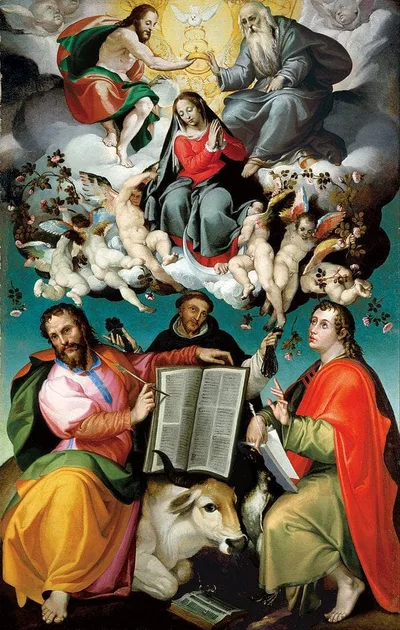
The catalogue dates the work to 1570 and gives the National Gallery of Ireland in Dublin as its location. The dimensions are 183 x 135 cm, a large upright. It is filed under male portraiture, Fantasy, and religious and mythological cultural heritage, with Mannerism Late Renaissance as the style and Italian as the nationality; the measured colour family is ochre.
What Mannerism does to a crowded picture
Mannerism names the phase of Italian painting after the High Renaissance — elongated limbs, poses held in torsion, a polished surface, space compressed rather than opened. On a single seated scholar that tendency has one body to work through, and the attributes have to find room inside a composition already committed to the twist of a figure.
Sources
5 references- Passarotti, Bartolomeo — Getty ULAN
Italian painter and printmaker, 1529-1592
- Bartolomeo Passarotti — Wikipedia
Bartolomeo Passarotti or Passerotti (1529–1592) was an Italian painter of the mannerist period, who worked mainly in his native Bologna. His family name is also spelt Passerotti or Passarotto. == Life and work == From approximately 1550 to
- Saint Jerome — Wikidata
description: painting by Bartolomeo Passarotti; inception: 1550; dimensions: 183 × 135 cm; collection: National Gallery of Ireland
- onlinecollection.nationalgallery.ie — record for "Saint Jerome"
Primary source record for this work (onlinecollection.nationalgallery.ie).
- Passerotti - Saint Jean Baptiste, saint Jérôme et saint François — Wikimedia Commons
High-resolution image of the work, hosted on Wikimedia Commons.