Hand-painted in oil
About this Artwork
Jerome is known by his desk
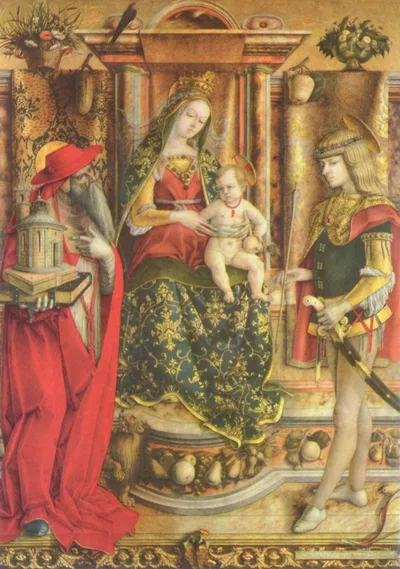
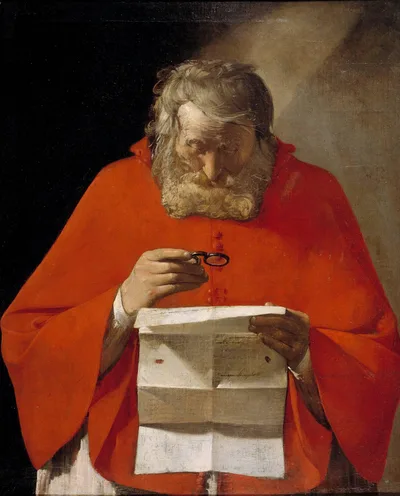
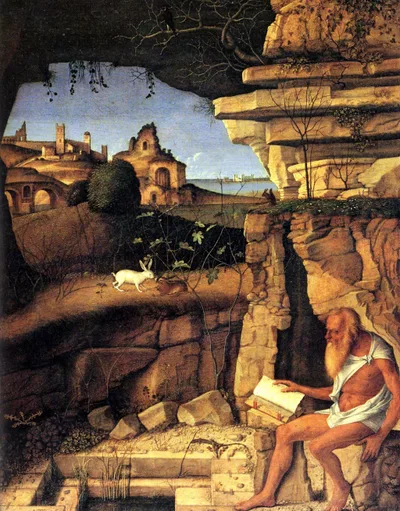
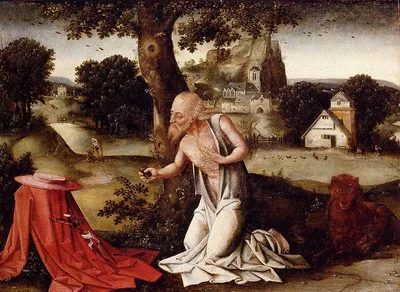
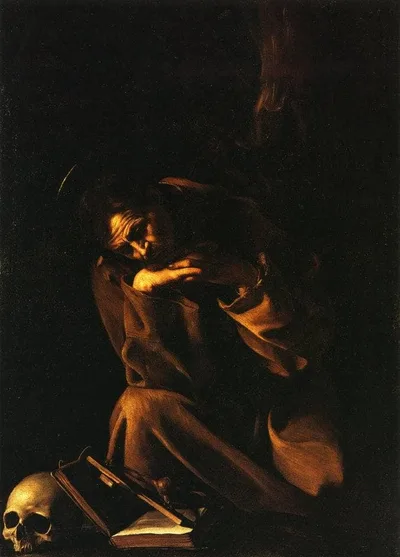
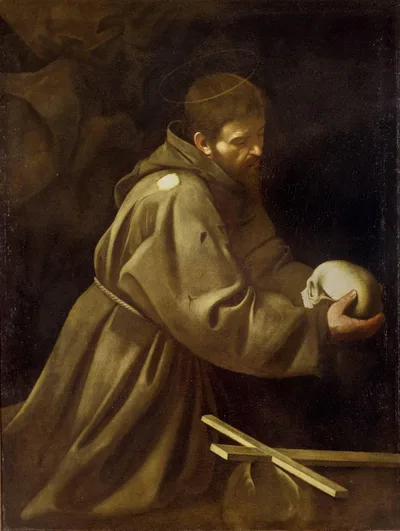
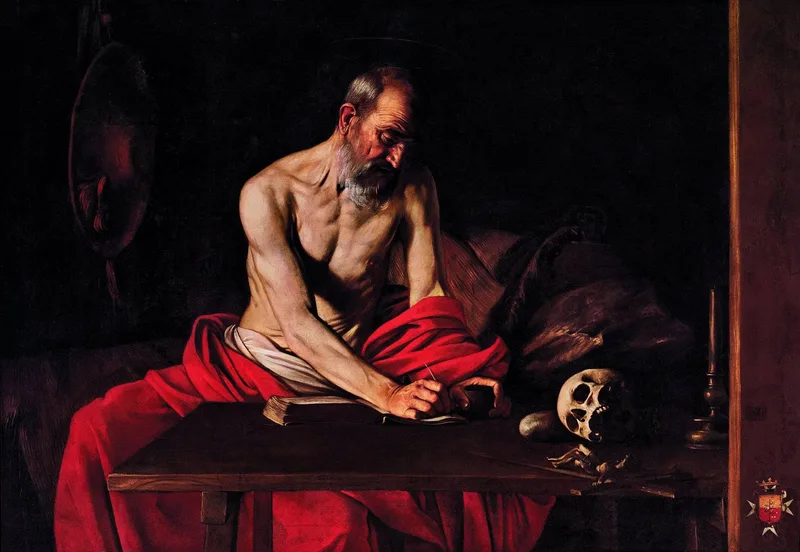
Some saints are named by an instrument of death; Jerome is named by his work. The stable attributes of Saint Jerome in Western art are a book and a pen, a skull set on the table, a red cloak or cardinal's hat, and a lion. The book and pen point to the translation of scripture into Latin for which he is remembered; the skull is the memento mori that belongs to the scholar's desk; the red is a later costume convention, since the office of cardinal did not exist in his lifetime. The title here — Saint Jerome Writing — names the attribute directly.
What the record holds
The entry dates the picture to 1605 and places it at the Borghese Gallery in Rome. Its dimensions are 112 x 157 cm, a horizontal format, which is the shape a picture takes when a table has to run across it. Beyond Religion, the record also files it under Still Life — an unusual pairing for a saint, and a fair one for an image organised around objects on a surface. The measured colour family is red.
Baroque and tenebrism
The record lists both Baroque and Tenebrism as styles. Tenebrism is the narrower of the two: a picture built out of darkness, lit selectively. Applied to a writing saint, it turns a desk into the only illuminated place in the world.
Sources
1 references- Caravaggio, Gianni — Getty ULAN
Italian sculptor and installation artist, born 1968