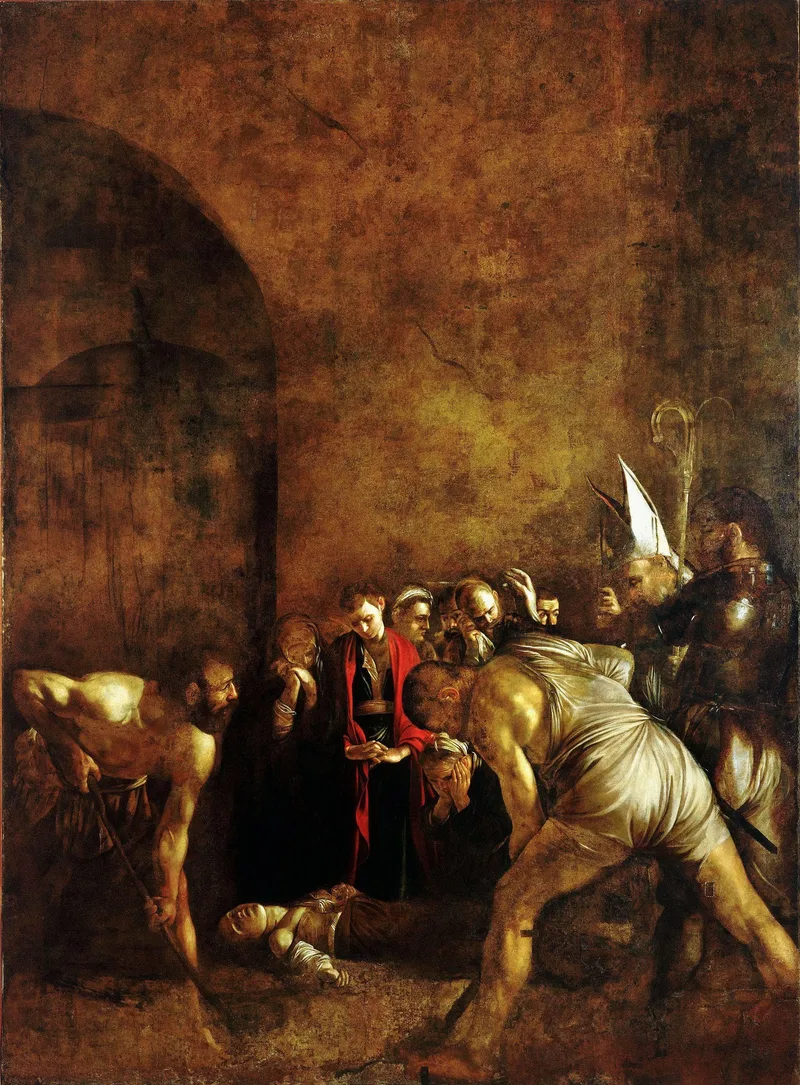
Hand-painted in oil
About this Artwork
Lucy, and the sign that is a pun
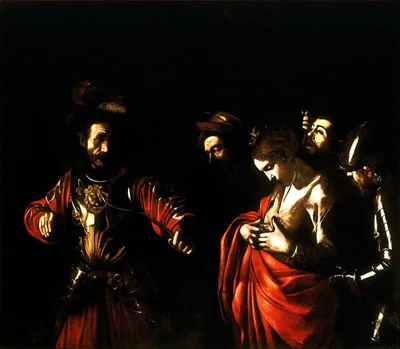
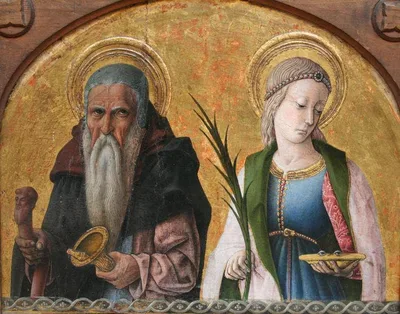
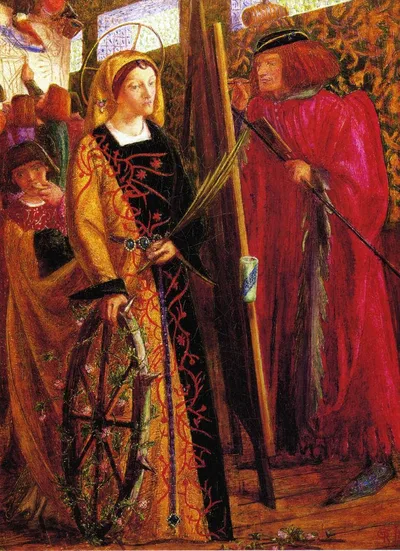
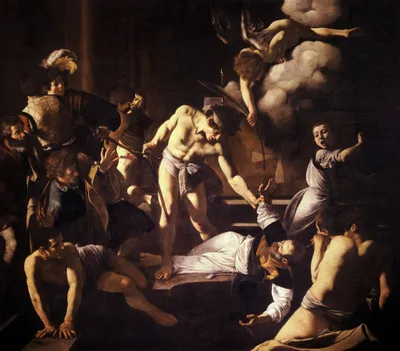
Lucy is identified by a dish holding two eyes. The convention is grim and entirely stable, and it rests on her name: lux is light, and the eyes are the organ of light, offered up. Secondary signs attach — a lamp, a sword at the throat, a martyr's palm — but the dish is the one that removes all doubt. A burial subject is unusual for her, because it comes after the attribute has done its work: the picture names a woman who is no longer able to hold anything.
What the record holds
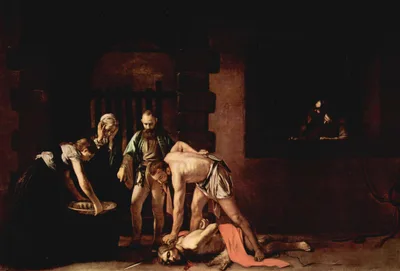
The catalogue dates the work to 1608 and gives the Bellomo Palace Museum, Syracuse, Italy as its location. Its dimensions are 408 x 300 cm — among the largest entries in this collection, and upright, so that the scale is height rather than breadth. It is filed under group portraiture, Religion, religious and mythological cultural heritage, and Fantasy, with Baroque as the style; the measured colour family is brown.
Scale as an argument
A canvas of these dimensions is not a picture a person stands in front of; it is a picture a person stands beneath. In this catalogue only a handful of entries carry measurements of that order. What the number establishes is the kind of room the work was made for, which for a burial subject determines almost everything about how the figures have to be arranged: at that height, the ground of the scene sits at the viewer's eye and the rest goes up.
Sources
1 references- Caravaggio, Gianni — Getty ULAN
Italian sculptor and installation artist, born 1968