Hand-painted in oil
About this Artwork
Three names, one attribute between them
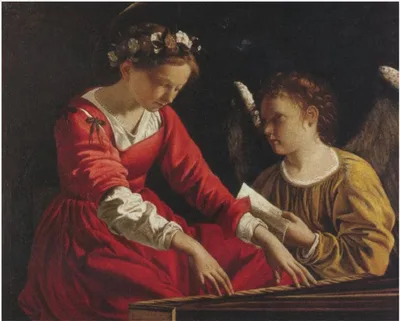
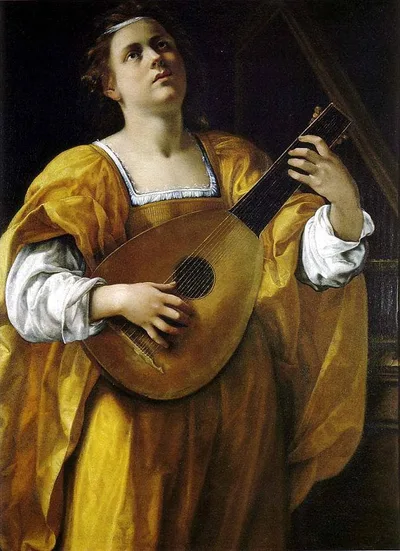
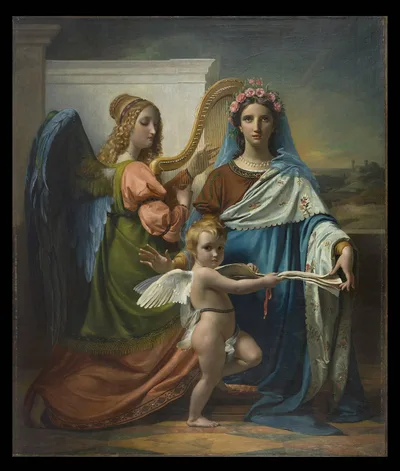
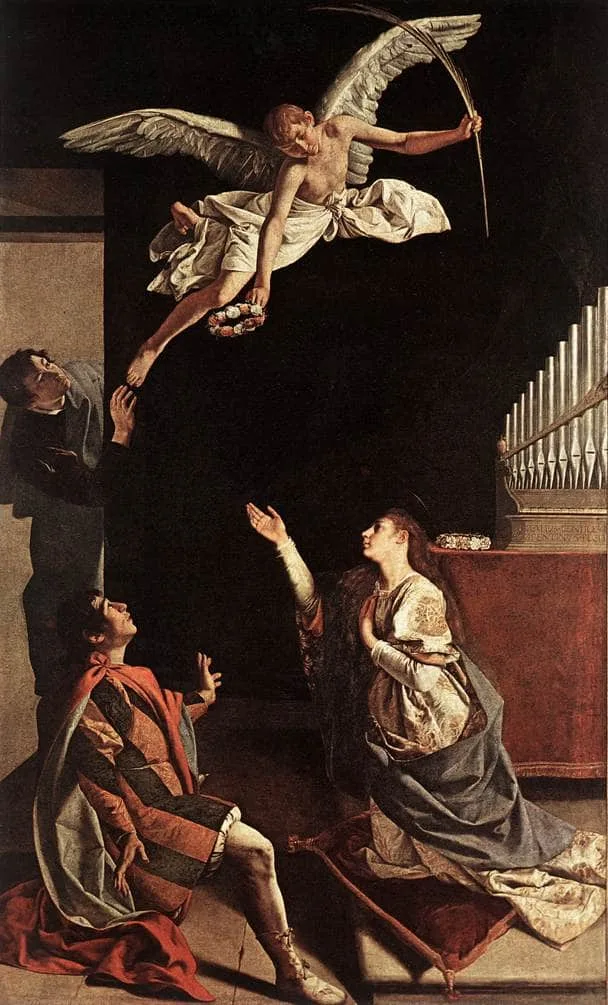
Cecilia is identified by music. The convention gives her an instrument — most often a small portative organ, sometimes a viol or a lute — and it is stable enough that an instrument in the hands of a young woman in a devotional picture is read as her name. The two men in this title come from the same legend and carry a different sign: Valerianus, her husband, and Tiburtius, his brother, are given crowns of roses and lilies, described in the account as brought to them by an angel. Three figures, two kinds of attribute, and no inscription needed for any of them.
What the record holds
The catalogue dates the work to 1607 and gives Palazzo Brera in Milan as its location. No dimensions are recorded in this entry. It is filed under religious cultural heritage and under Fantasy, with Mannerism Late Renaissance as the style and Italian as the nationality; the measured colour family is brown.
Why Fantasy sits in the categories
That tag is doing straightforward work here. The episode the title names requires a figure with wings, and a subject index that records what a picture contains has to file such a figure somewhere. It is a description of the cast, not a judgement on the story. The crowns are the attribute; the messenger who brings them is what the category is recording.
Sources
3 references- Gentileschi, Orazio — Getty ULAN
Italian painter, 1563-1639
- Orazio Gentileschi — Wikipedia
Orazio Lomi Gentileschi (Italian pronunciation: [oˈrattsjo ˈlɔːmi dʒentiˈleski]; 1563 – 7 February 1639) was an Italian painter. Born in the Republic of Florence, he began his career in Rome, painting in a Mannerist style, much of his work
- Saints Cecilia, Valerianus and Tiburtius by Orazio Gentileschi at Pinacoteca di Brera — Wikimedia Commons
High-resolution image of the work, hosted on Wikimedia Commons.