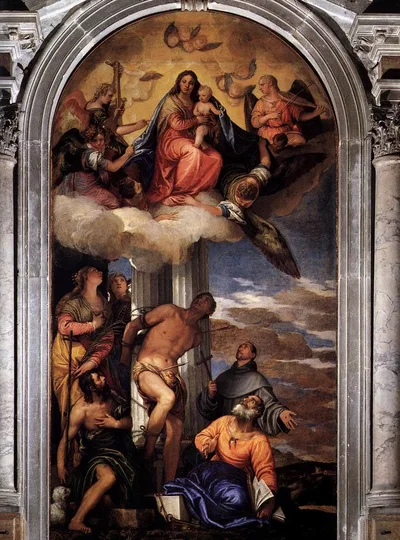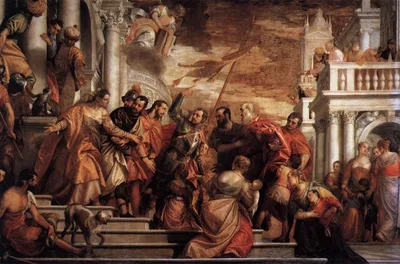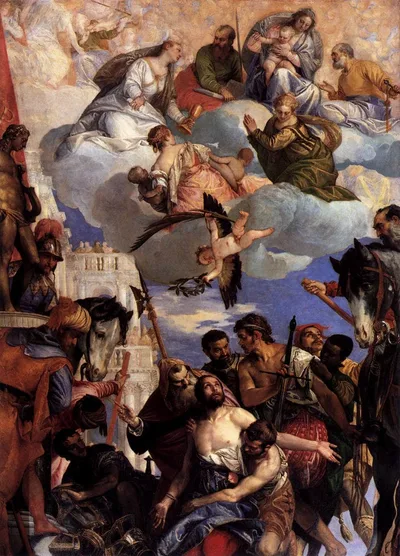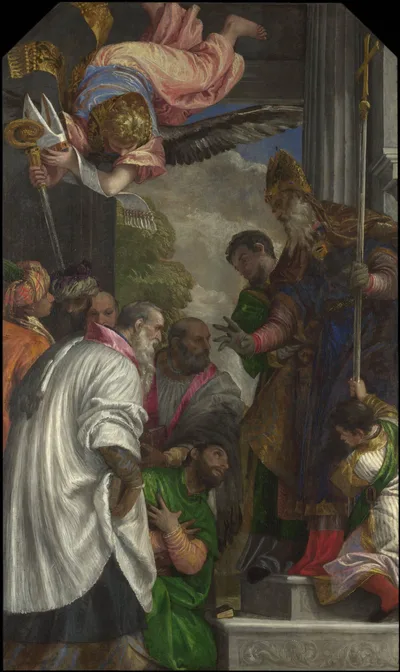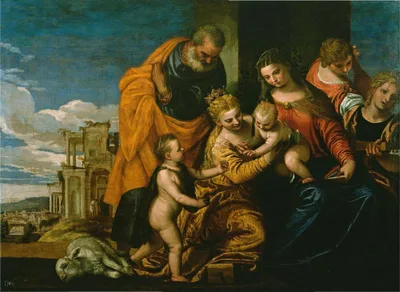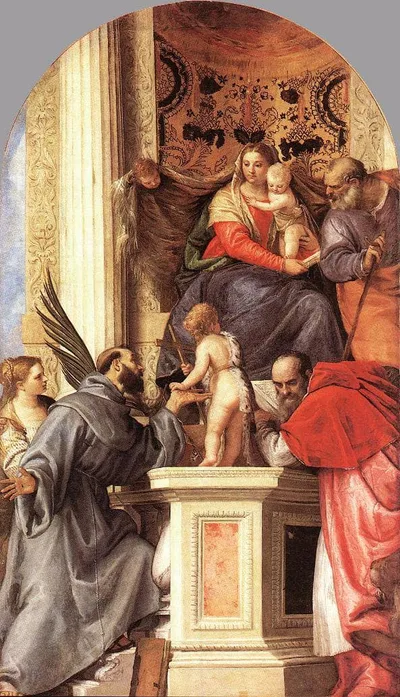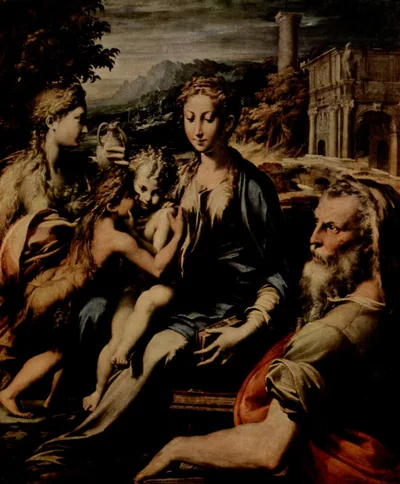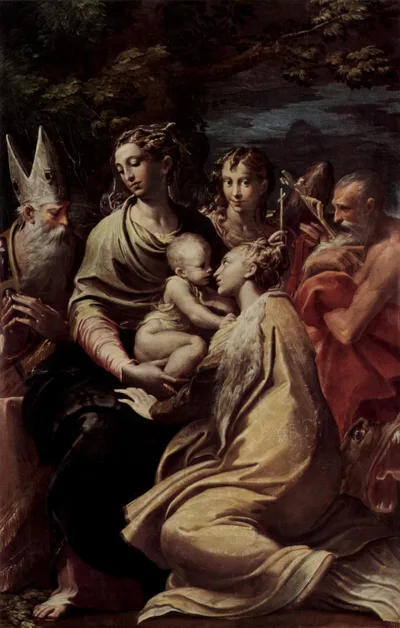
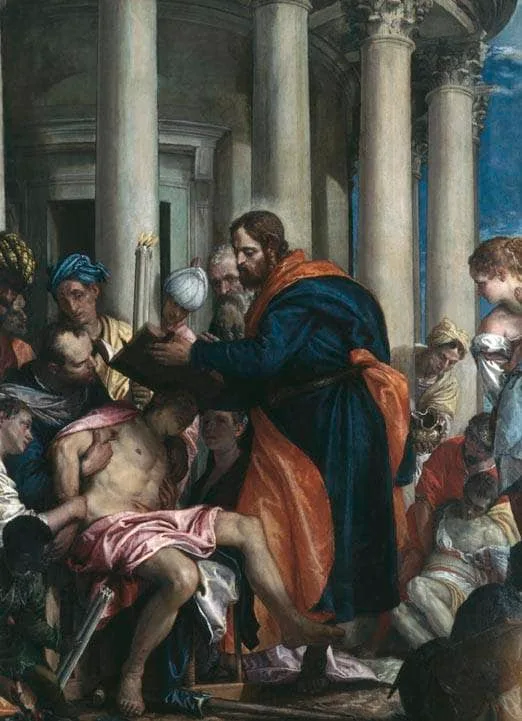
Hand-painted in oil
About this Artwork
Named by an action nobody else performs
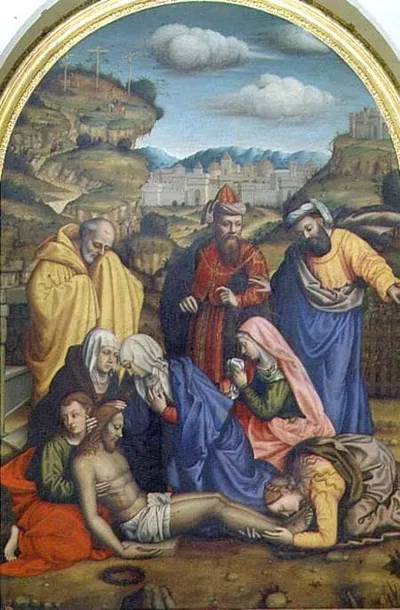
Barnabas is rare in painting, and his attributes are correspondingly weak: a gospel book, sometimes an olive branch, sometimes the stones of his martyrdom. None of them is distinctive enough to carry a picture on its own. What this title uses instead is an episode — a healing — which functions as an attribute because the tradition attaches it to him in particular. Where the object system fails, the narrative system takes over. This is the only title in the collection that names Barnabas.
What the record holds
The catalogue dates the canvas to 1566 and gives the Musée des Beaux-Arts de Rouen, in Rouen, France, as its location. The dimensions are 260 x 193 cm, a large upright. It is filed under group portraiture and Religion, with Mannerism Late Renaissance as the style and Italian as the nationality; the measured colour family is brown.
An artist this collection returns to
12 works by this painter appear in the collection, and their titles are dominated by saints' names and martyrdoms — a consequence of how the collection was assembled rather than a summary of what he painted. Read together, those 12 entries make a useful cross-section of sixteenth-century Venetian practice at large scale: altar-sized canvases, group compositions, and subjects that require an attribute to be legible from the far end of a room.
Sources
1 references- Caliari, Carlo — Getty ULAN
Italian painter, 1570-1596