Hand-painted in oil
About this Artwork
The dragon says George; the index says forest
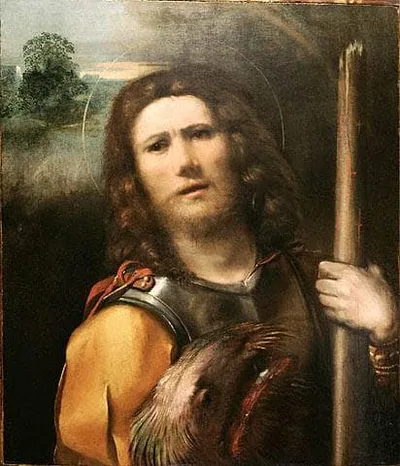
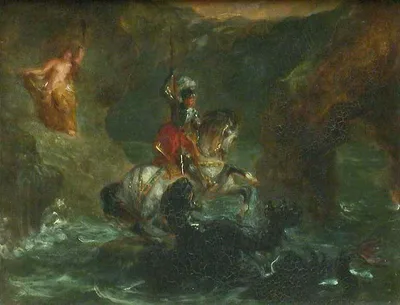
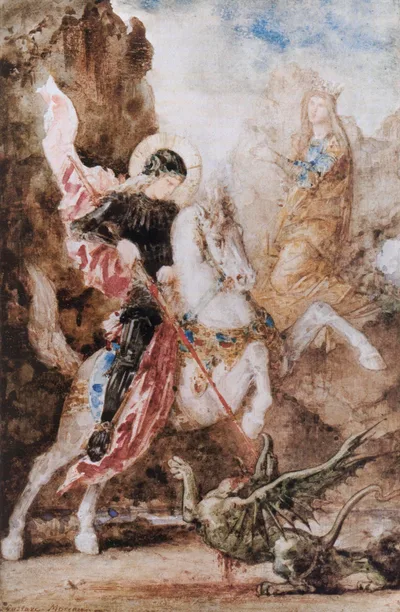
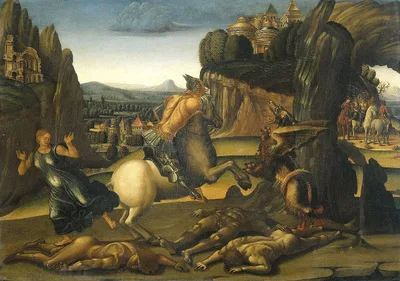
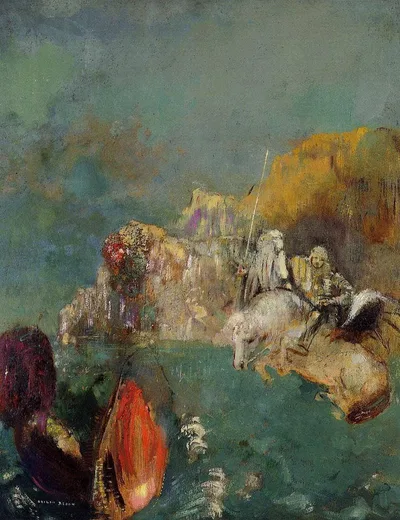
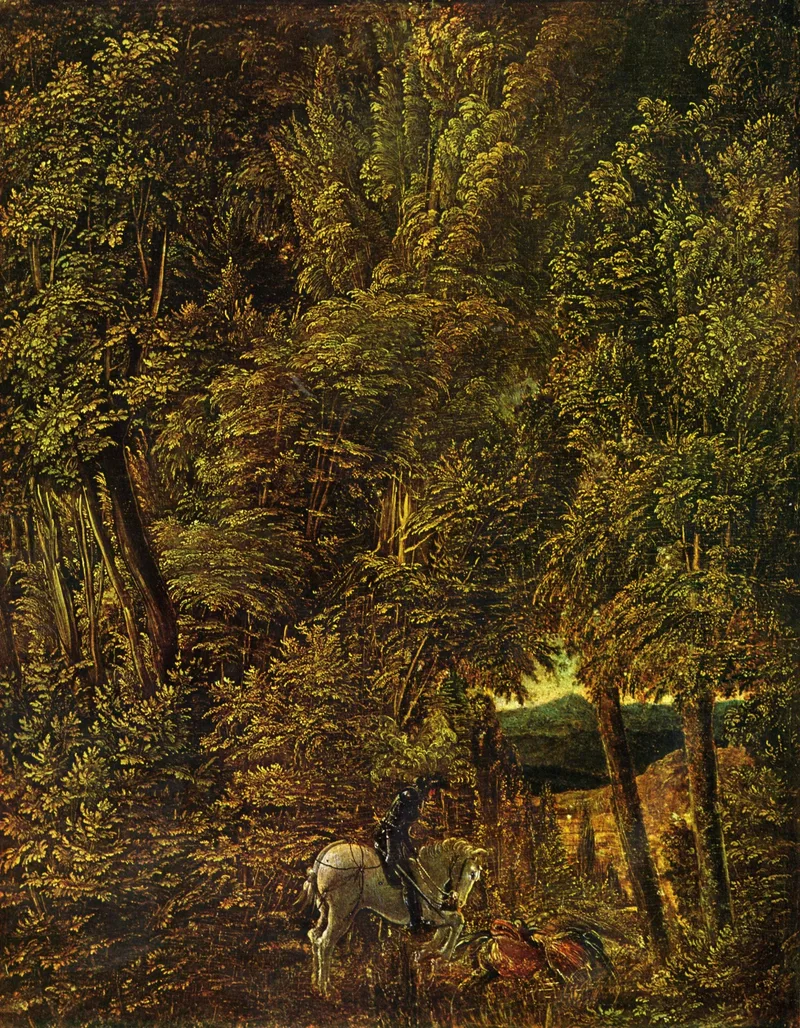
Saint George is identified by a dragon. It is one of the most stable signs in Western art, and it does not need help: a mounted figure in armour with a lance and a serpent is read as George without a caption. The word George appears in 12 titles in this catalogue, and the dragon is what most of them have in common.
What the record holds
The entry is dated 1510 and gives the Alte Pinakothek, Munich, Germany as its location. The dimensions are 28.2 x 22.5 cm — a small upright panel, the size of an object held rather than hung. It is filed under Northern Renaissance with German as the nationality, and the measured colour family is brown.
What the categories are actually recording
The subject categories on this entry are worth reading in order: Landscapes, then Forest, then Animal Art, then Botanicals with Tree and Leaf as subheadings, then Eco Nature, and only then Religion. An index that lists what a picture contains has put the woodland first and the saint last. The title has done the same thing — it opens with Forest Scene and reaches the dragon at the end. Both are describing a subject in which the naming object is small and the country around it is not.
Sources
3 references- Altdorfer, Albrecht — Getty ULAN
German painter and printmaker, ca. 1480-1538
- Albrecht Altdorfer — Wikipedia
Albrecht Altdorfer (c. 1480 – 12 February 1538) was a German painter, engraver and architect of the Renaissance working in Regensburg. Along with Lucas Cranach the Elder and Wolf Huber he is regarded to be the main representative of the Dan
- Saint George and the Dragon — Wikipedia
Saint George and the Dragon is a legend in which Saint George—a soldier venerated in Christianity and among the Druze—defeats a dragon. The story goes that the dragon originally extorted tribute from villagers. When they ran out of livestoc