Hand-painted in oil
About this Artwork
Two saints, one name, two kits
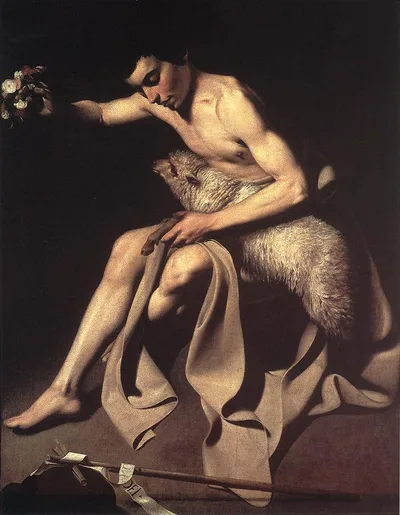
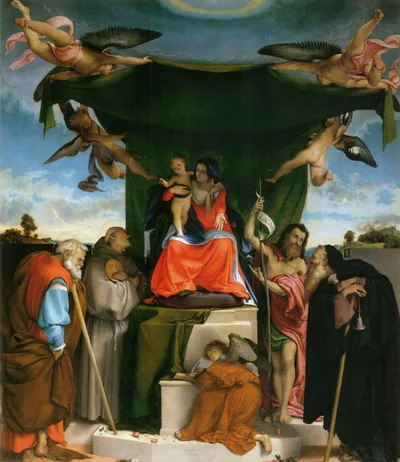
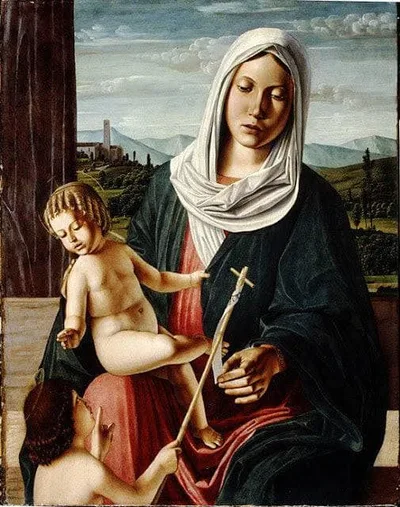
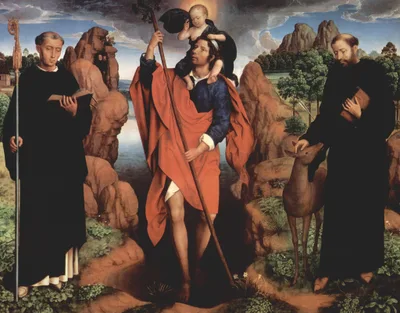
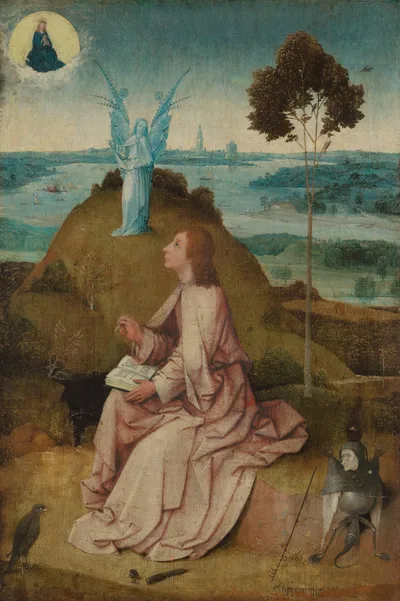
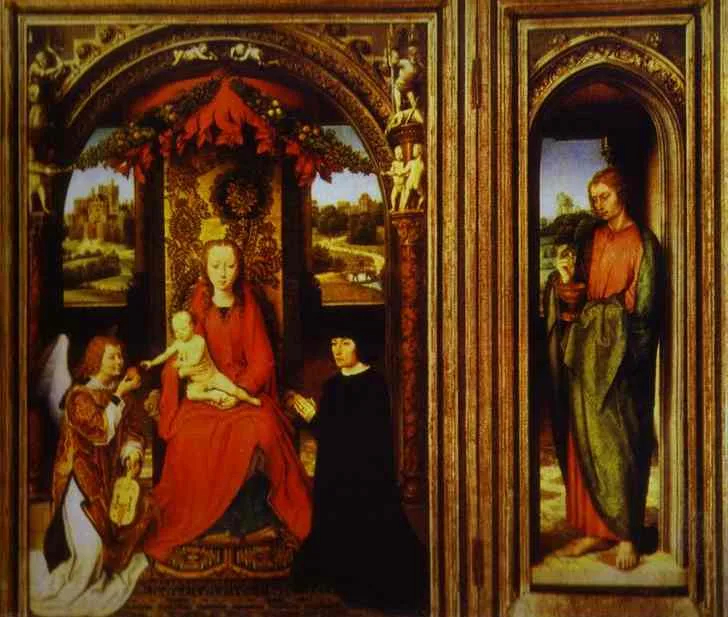
The title names both Johns, and the pairing is the clearest demonstration in this collection of why attributes exist. The Baptist is given camel hair or a rough skin, a slender reed cross, sometimes a lamb. The Evangelist is given an eagle — his symbol in the fourfold scheme assigned to the gospel writers — a book, and a chalice with a serpent rising from it, from an episode in his legend. Same name, no overlap at all. Once both are in one structure, nothing about the name distinguishes them and everything about the objects does.
What the record holds
The catalogue dates the work to 1490 and gives the Kunsthistorisches Museum in Vienna as its location. No dimensions are recorded. It is filed under portraiture and religious cultural heritage, with Northern Renaissance as the style and Flemish as the nationality; the measured colour family is brown.
What the word altar changes
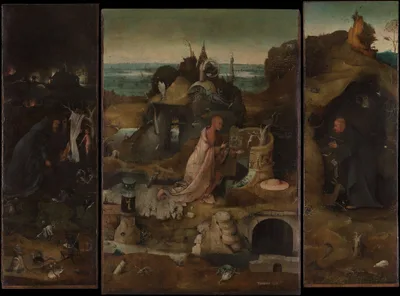
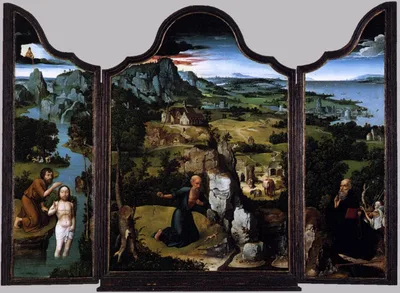
The title calls this an altar rather than a panel, which describes a structure with parts: a centre, wings, and a fixed order of reading. In that format the attribute is not only an identifier but a piece of navigation — each compartment holds a figure, and the object in the figure's hands tells a viewer which compartment they are looking at. The record gives no measurement, so the scale of that structure is not established here.
Sources
3 references- Hans Memling — Wikipedia
Hans Memling (also spelled Memlinc; c. 1430 – 11 August 1494) was a German-Flemish painter who worked in the tradition of Early Netherlandish painting. Born in the Middle Rhine region, he probably spent his childhood in Mainz. During his ap
- Memling, Hans, School of — Getty ULAN
Unknown artist
- St John Altarpiece (Memling) — Wikipedia
The St John Altarpiece (sometimes the Triptych of the two Saints John or the Triptych of St John the Baptist and St John the Evangelist) is a large oil-on-oak hinged-triptych altarpiece completed around 1479 by the Early Netherlandish maste