Hand-painted in oil
About this Artwork
Hermit is a category, not a name
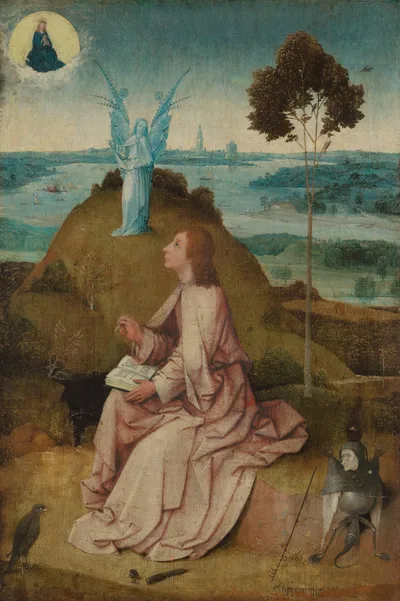
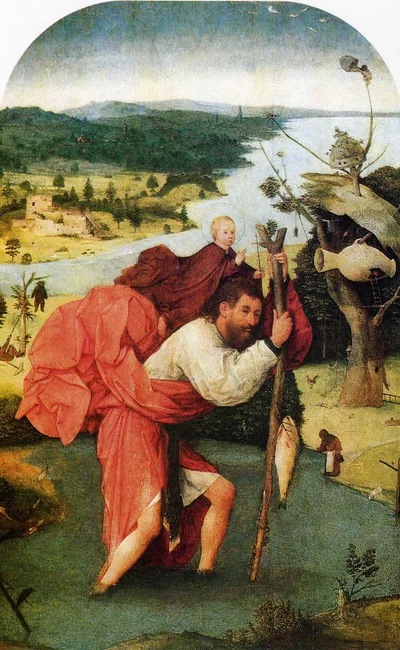
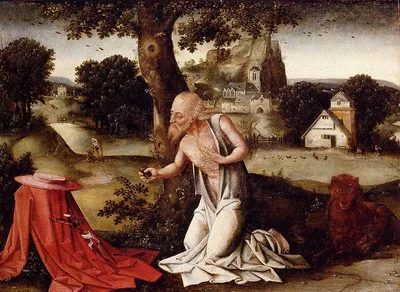
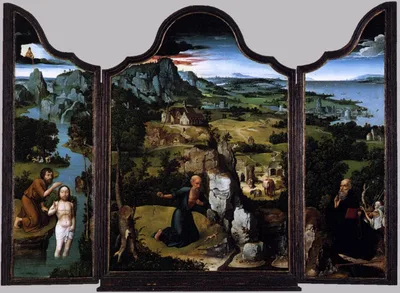
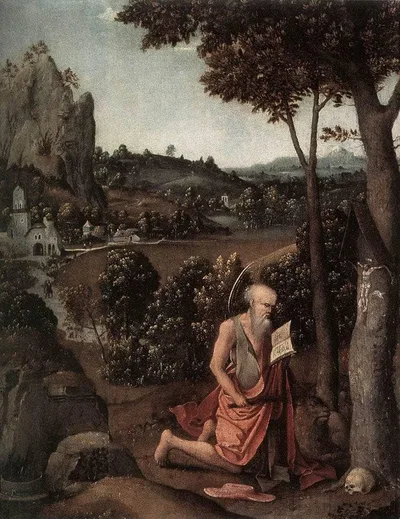
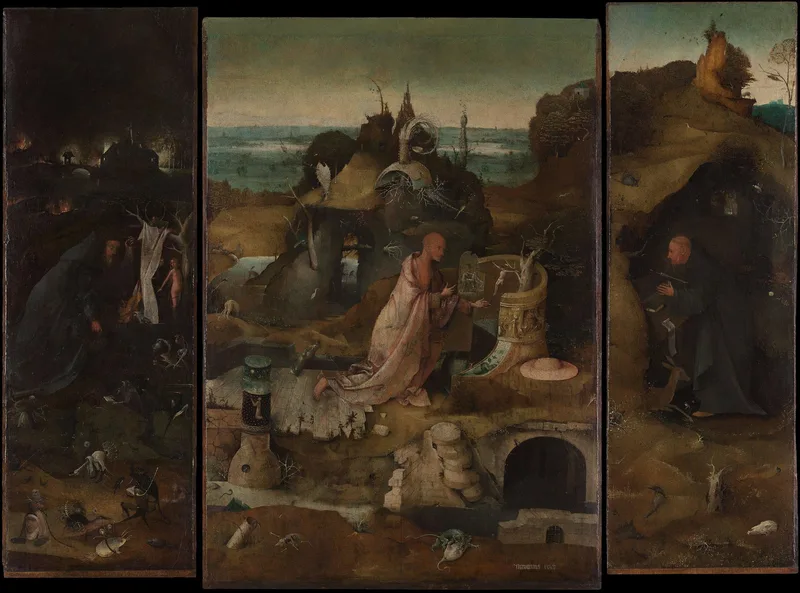
The title gives a class rather than a person. Hermit saints are a recognisable group in Western painting, and they arrive with a shared kit: a wilderness, a rough habit, a skull, a crucifix, and a cave or a shelter. Individually they are separated by one object each — Jerome by a lion, Anthony the Abbot by a tau-shaped cross and a bell and a pig, Giles by a hind. The record here does not name them, so the attributes are the only identification available and the entry cannot supply them.
What the record holds
The entry is dated 1505 and gives the Palazzo Ducale, Venice, Italy as its location. The dimensions are 86 x 50 cm, tall and narrow — the proportion of a triptych panel rather than of a whole opened altarpiece. It is filed under Landscapes and Rural, cultural heritage and religious cultural heritage, and Religion, with Northern Renaissance as the style and Dutch as the nationality; the measured colour family is brown.
Landscape as an attribute
The landscape headings on this entry are not incidental. For a hermit, the country is part of the identification: the withdrawal is the subject, and the emptiness around the figure carries the meaning that a wheel or a set of keys carries elsewhere. An index that files a group of saints under Rural is recording exactly the thing the tradition wants recorded.
Sources
4 references- Bosch, Hieronymus — Getty ULAN
Netherlandish painter, draftsman, ca. 1450-1516
- Hieronymus Bosch — Wikipedia
Hieronymus Bosch (; Dutch: [ɦijeːˈroːnimʏz ˈbɔs] ; born Jheronimus van Aken [jeːˈroːnimʏs fɑn ˈaːkə(n)]; c. 1450 – 9 August 1516) was a Dutch painter from Brabant. He is one of the most notable representatives of the Early Netherlandish pai
- The Hermit Saints — Wikipedia
The Hermit Saints is a religious oil on panel painting displayed as a triptych which was painted c. 1493 by the Early Netherlandish artist Hieronymus Bosch. The entirety of the triptych painting measures 86 by 60 centimetres (34 in × 24 in)
- Hieronymus Bosch - Hermit Saints Triptych — Wikimedia Commons
High-resolution image of the work, hosted on Wikimedia Commons.