Hand-painted in oil
About this Artwork
The dragon is the attribute
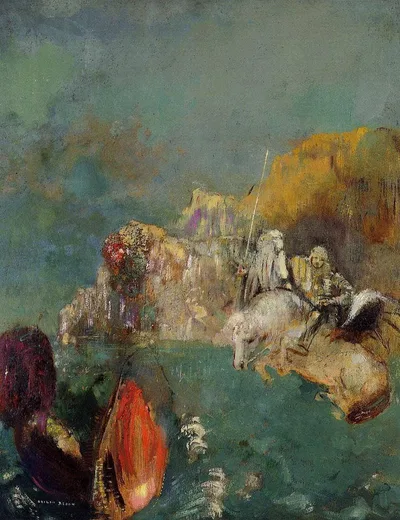
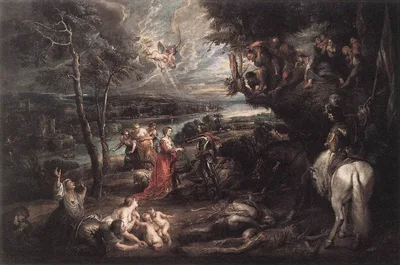
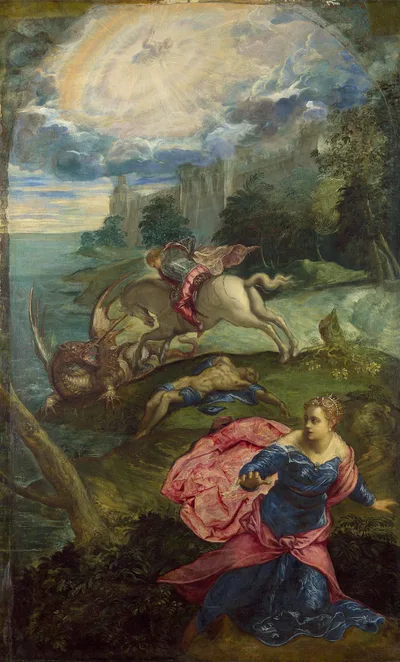
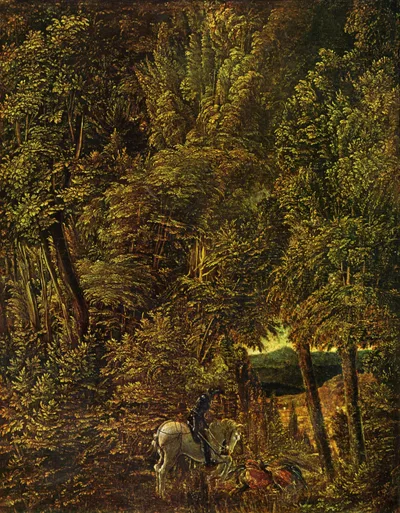
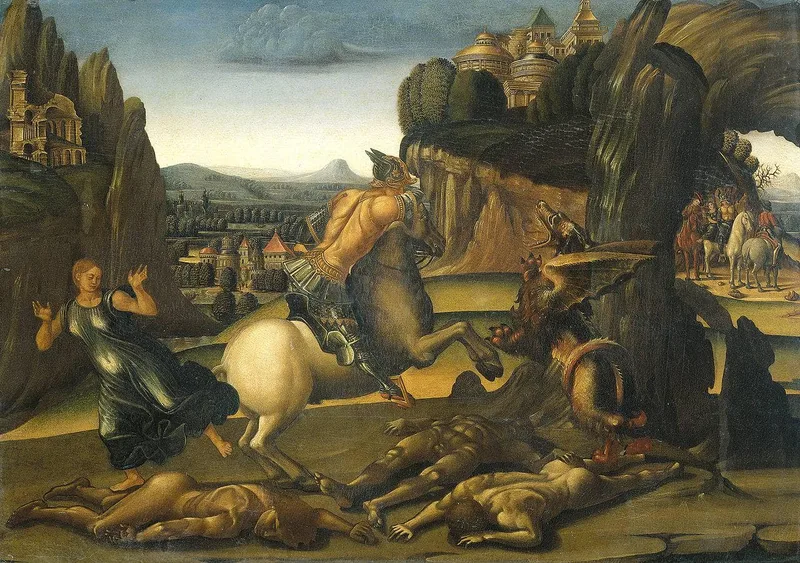
Saint George is named by a dragon. A mounted knight in armour driving a lance into a serpent is one of the most immediately legible images in Western art, and the sign carries with it a fixed cast: the beast, the lance, sometimes a princess at the edge of the scene, sometimes a walled town in the distance whose people the legend says were spared. The dragon is not decoration around the saint; it is the label that says which saint this is.
What the record holds
The catalogue dates this panel to 1505 and gives the Rijksmuseum in Amsterdam as the collection. Its dimensions are 55 x 77.5 cm — small, and wider than tall. The categories are unusual for a saint's image and worth reading: alongside Religion and Fantasy the record files it under Landscapes, with Mountain and Rock as subheadings. High Renaissance is the style given, and the measured colour family is yellow.
A saint inside a landscape
Those landscape categories describe a real difference in kind. In a horizontal panel of this size, with rock and mountain filing as subject matter in their own right, the encounter is set into terrain rather than staged against a neutral ground. The dragon still does the naming; the country around it is doing something else.
Sources
1 references- Signorelli, Luca — Getty ULAN
Italian painter and draftsman, ca. 1441 or 1450-1523