Hand-painted in oil
About this Artwork
Matthew is named twice over
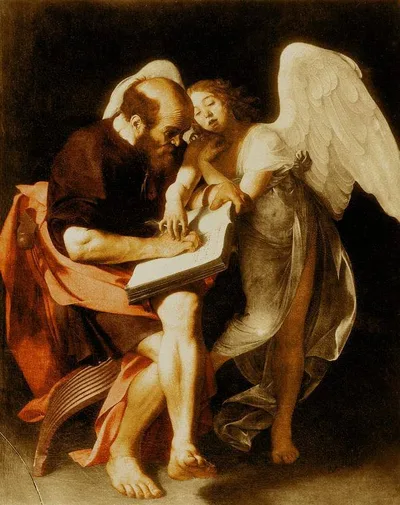
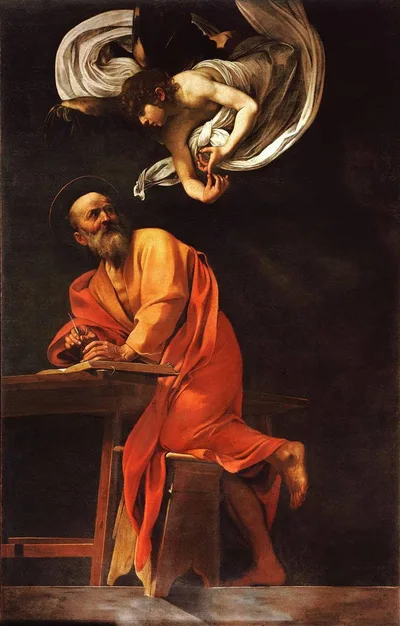
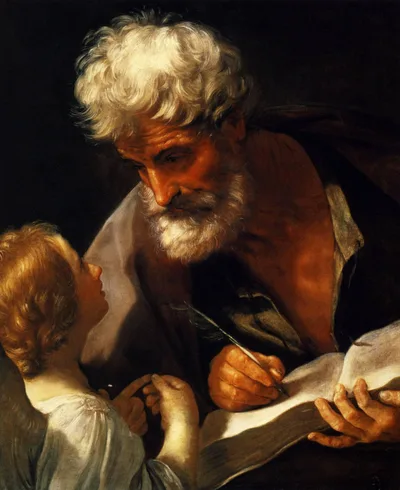
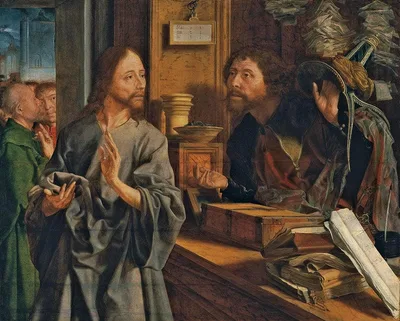
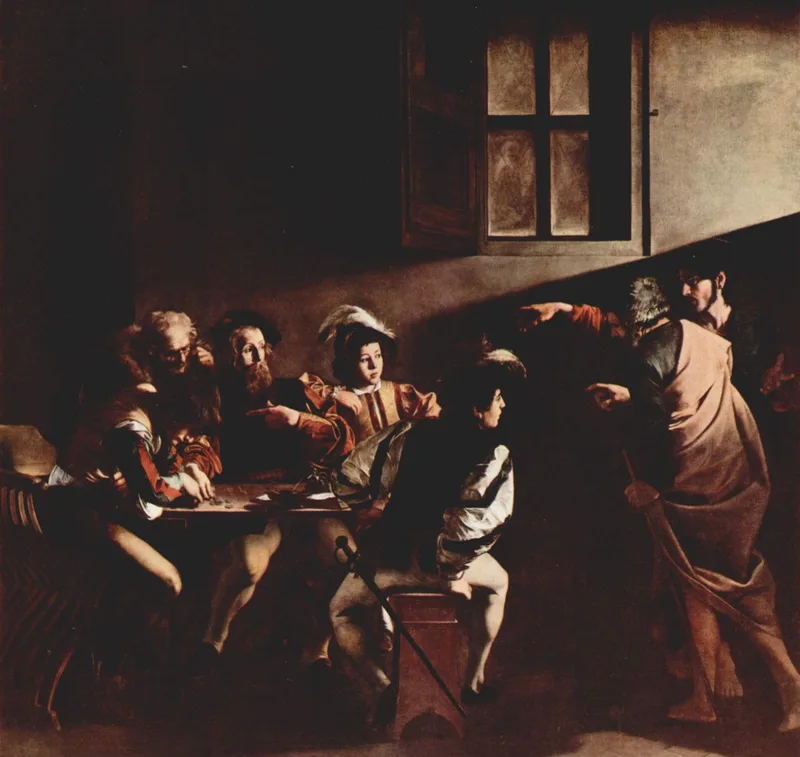
Matthew comes with two sets of signs. As an evangelist he is given a winged man — the figure assigned to him in the fourfold scheme that also hands an eagle to John, a lion to Mark and an ox to Luke — and as a person he is given the money of the trade the Gospels say he left: a table, coins, a counting-house. A calling subject uses the second set, because the whole point of the episode is the moment before the first set applies. The coins on the table are the attribute; they name a man who is about to stop being the man they name.
What the record holds
The catalogue dates the work to 1600 and gives San Luigi dei Francesi, Rome, Italy as its location. The dimensions are 323 x 343 cm — very large, and close to square. It is filed under group portraiture and Religion, with the styles given as Baroque and Tenebrism; the measured colour family is brown.
Three entries at one address
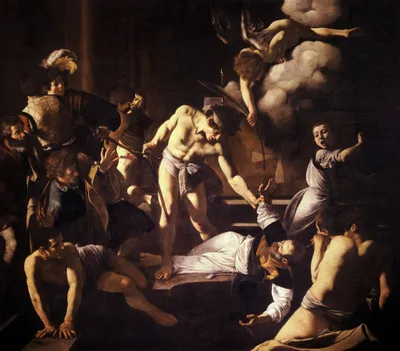
3 works in this catalogue give this church as their location, and two of them — this one and The Martyrdom of Saint Matthew — are recorded at the identical dimensions of 323 x 343 cm. The third is taller and narrower. That correspondence is visible in the fields themselves, and nothing beyond the fields is claimed for it here.
Sources
7 references- Caravaggio, Gianni — Getty ULAN
Italian sculptor and installation artist, born 1968
- Caravaggio — Wikipedia
Michelangelo Merisi da Caravaggio (also Michele Angelo Merigi or Amerighi da Caravaggio; 29 September 1571 – 18 July 1610), known mononymously as Caravaggio, was an Italian painter active in Rome for a significant portion of his artistic li
- Caravaggio, Cecco del — Getty ULAN
Italian painter, active ca. 1610-1620
- The martyrdom of Saint Matthew — Wikidata
description: painting by Caravaggio; inception: 1599-01-01; dimensions: 323 × 343 cm
- rkd.nl — record for "The martyrdom of Saint Matthew"
Primary source record for this work (rkd.nl).
- The Calling of Saint Matthew — Wikipedia
The Calling of Saint Matthew is an oil painting by the Italian Baroque master Caravaggio that depicts the moment Jesus Christ calls on the tax collector Matthew to follow him. It was completed in 1599–1600 for the Contarelli Chapel in the c
- Caravaggio, Michelangelo Merisi da - The Calling of Saint Matthew - 1599-1600 (hi res) — Wikimedia Commons
High-resolution image of the work, hosted on Wikimedia Commons.