Hand-painted in oil
About this Artwork
The attribute that is a wound
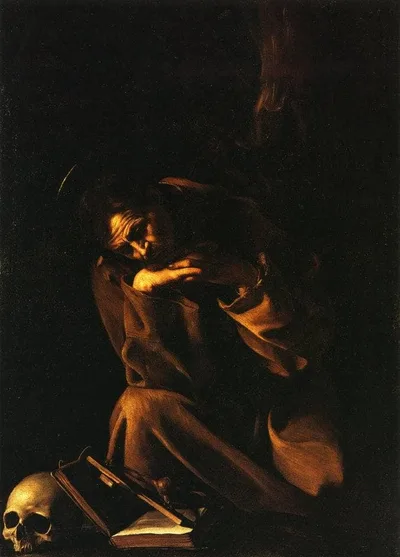
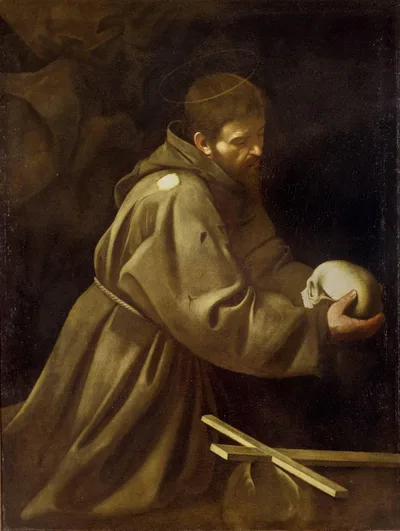
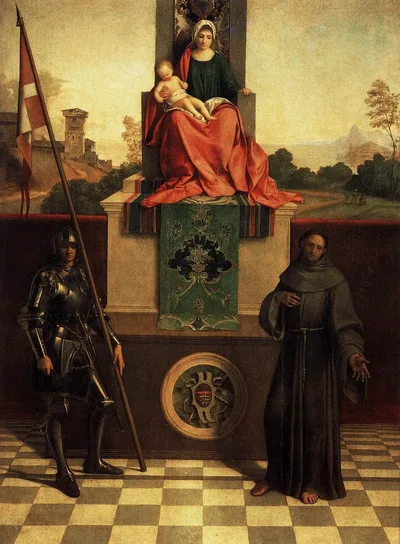
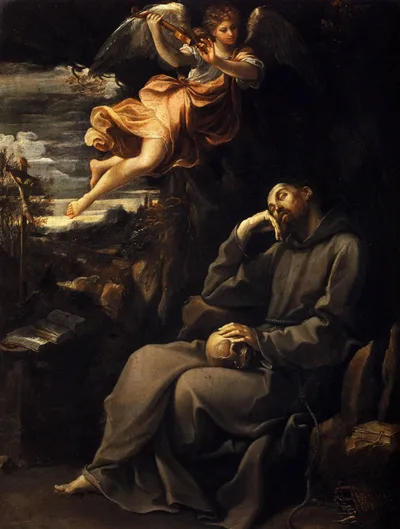
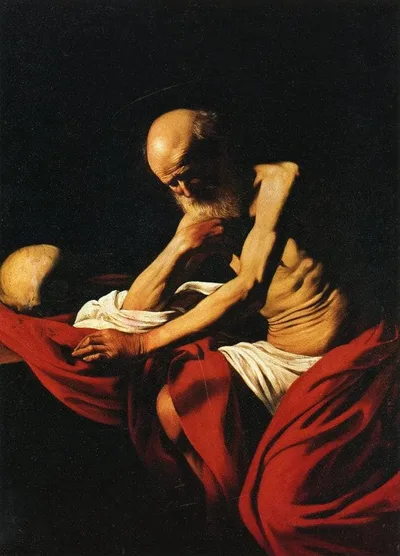
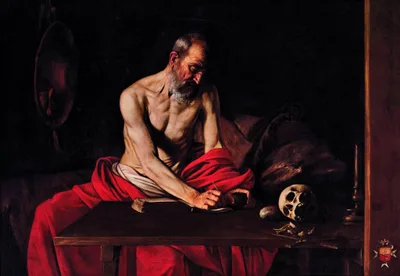
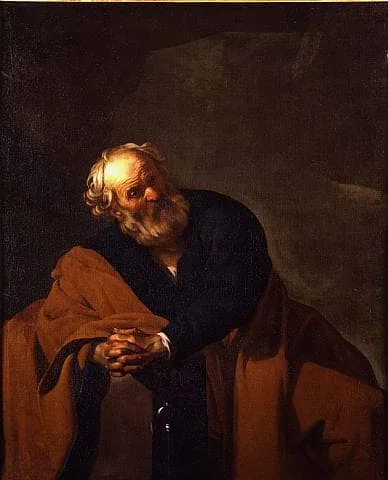
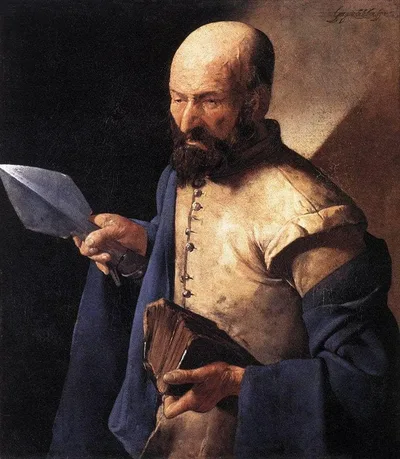
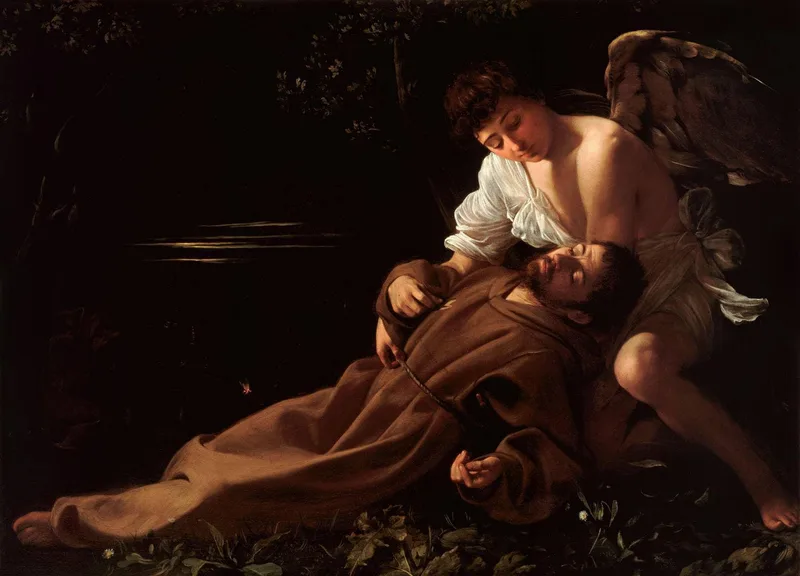
Most saints carry an object. Francis of Assisi carries marks. The stigmata — wounds corresponding to those of the crucified Christ — are his identifying attribute in Western art, and they are unusual precisely because they cannot be set down on a table or held in a hand. Alongside them the tradition gives him a plain brown habit knotted with a cord, and often a companion friar or an attending angel. The title of this work names the moment as an ecstasy, which is the term the tradition uses for the state in which the marks are received rather than displayed.
What the record holds
The catalogue dates the work to 1595 and gives the Wadsworth Atheneum in Hartford, Connecticut, as the collection that holds it. The dimensions are 93.9 x 129.5 cm — wider than tall, a format that lets a reclining figure lie across the picture rather than stand in it. The measured colour family is brown, which is consistent with a subject whose costume convention is itself undyed wool.
Baroque, tenebrism
The record files the work under Baroque and Tenebrism. Tenebrism describes a picture composed of shadow with light entering narrowly. It is a method with a theological convenience for this subject: an ecstasy is by definition something that happens at night, to one person, unwitnessed.
Sources
1 references- Caravaggio, Gianni — Getty ULAN
Italian sculptor and installation artist, born 1968