
Published · Saints Oil Paintings editorial desk
Saint Peter vs Saint Paul: Recognising the Apostles
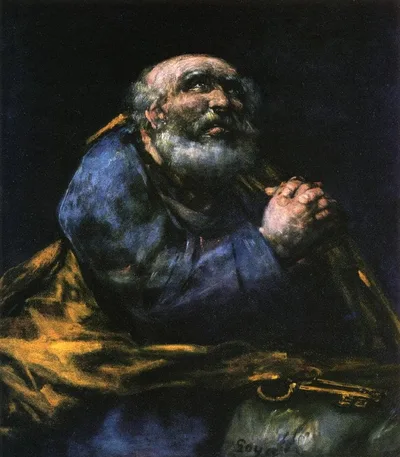
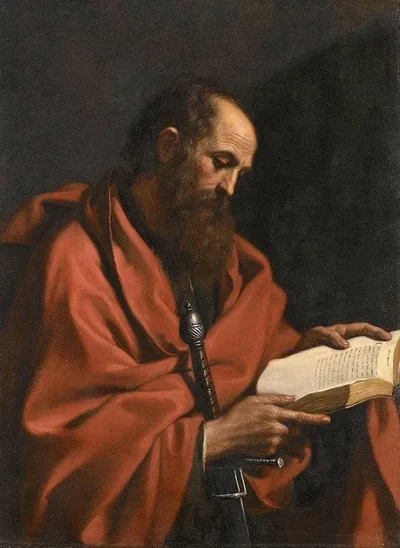
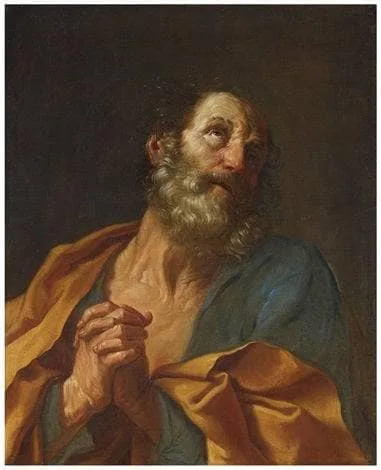
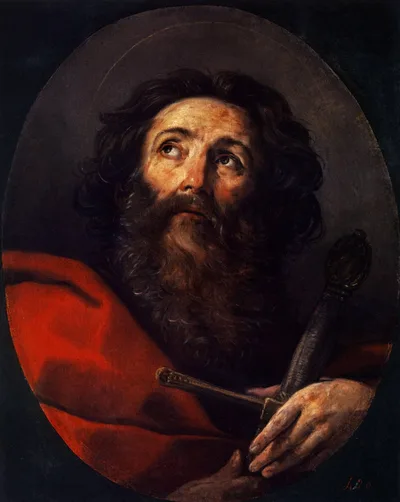
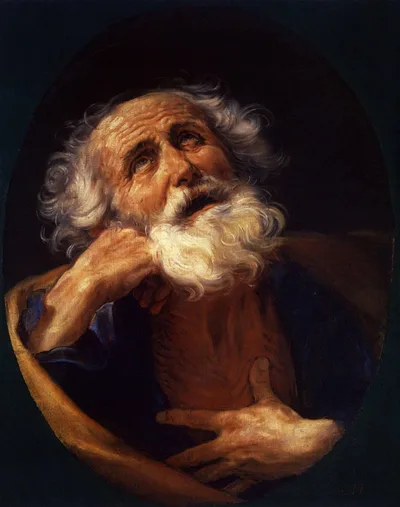
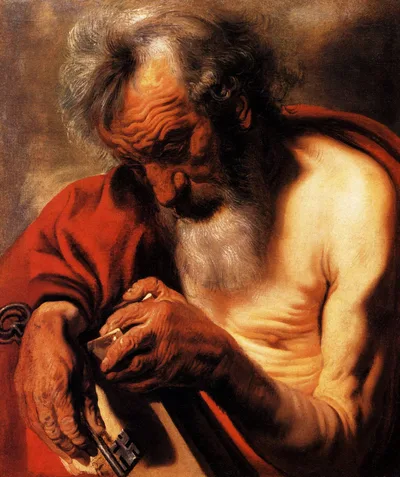
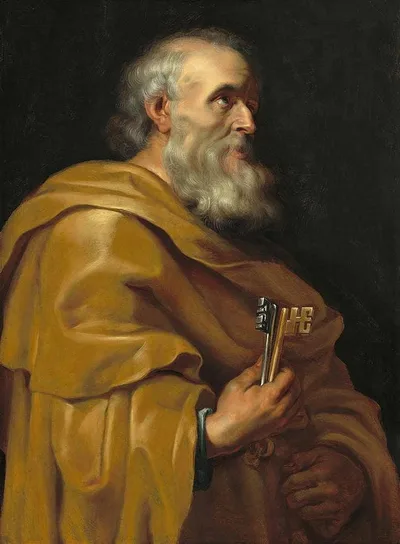
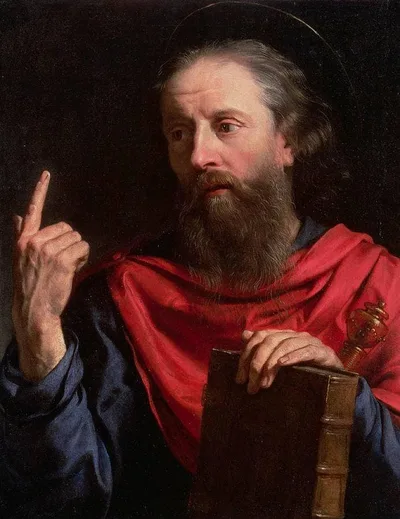
Keys often point towards Saint Peter and a sword towards Saint Paul. They are useful starting points, not compulsory equipment. An inscription or an identified narrative can establish who a figure is when the expected object is absent. [1][2]
A documented comparison
The National Gallery’s Virgin and Child with Saint Peter and Saint Paul, attributed to the workshop of Dirk Bouts, places the two apostles beside the Virgin. A key emerges beneath Peter’s robe. Paul’s sword rests against the architecture behind him; it is not simply held up for recognition. [1]
The Gallery relates Peter’s key to Matthew 16:19 and identifies Paul’s sword with his martyrdom. These meanings explain the attributes in this specific painting. They do not mean that every person with keys is Peter or every figure carrying a sword is Paul. The surrounding scene still matters. [1]


Paul without the expected sword
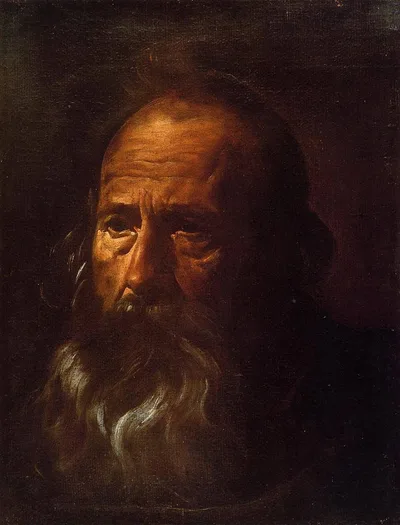
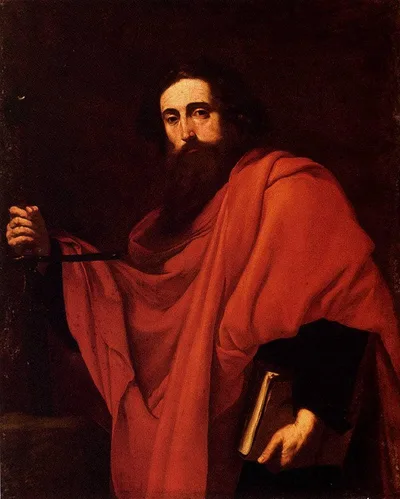
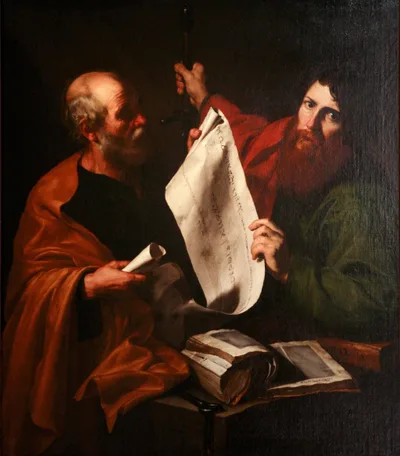
Velázquez’s Saint Paul in the Museu Nacional d’Art de Catalunya offers a useful counterexample to identification by sword alone. The museum describes a seated saint holding a book and points to the inscription “S. PAVLVS” as his explicit identification. Its record dates the canvas to about 1619 and gives inventory number 024242-000. [2]
The book supports the apostolic or intellectual character of the figure, but the inscription does the more precise work. When comparing photographs, locate that inscription before interpreting an indistinct object under the cloak. A catalogue identity need not depend on the presence of every customary attribute. [2]


Peter can be named directly
In Saints Peter and Jerome by Antonio Vivarini and Giovanni d’Alemagna, the National Gallery records the saints’ names on a pedestal and identifies Peter’s large keys. Here text and attribute reinforce one another. The named companion is Jerome, not Paul: pairing two male saints does not automatically make them Peter and Paul. [3]

_-_Saints_Peter_and_Jerome_-_NG768_-_National_Gallery.jpg)
| Painting | Saints shown | Attribute in the record | Inscription | Collection |
|---|---|---|---|---|
| Workshop of Dirk Bouts, The Virgin and Child with Saint Peter and Saint Paul (NG774) | Peter and Paul | Peter: a key beneath his robe. Paul: a sword against the arch behind him | — | The National Gallery, London |
| Velázquez, Saint Paul (024242-000) | Paul | A book; no sword | S. PAVLVS, upper left | Museu Nacional d'Art de Catalunya, Barcelona |
| Antonio Vivarini and Giovanni d'Alemagna, Saints Peter and Jerome (NG768) | Peter and Jerome | Peter: large keys. Jerome: a book | Names on the pedestal | The National Gallery, London |
A dash means the cited record does not mention an inscription. [1][2][3]
Keep the episode and the version separate
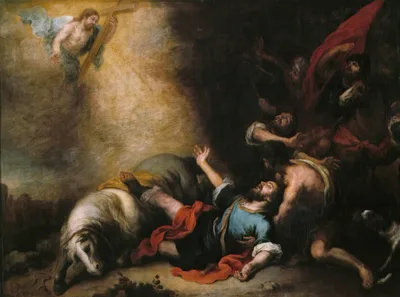
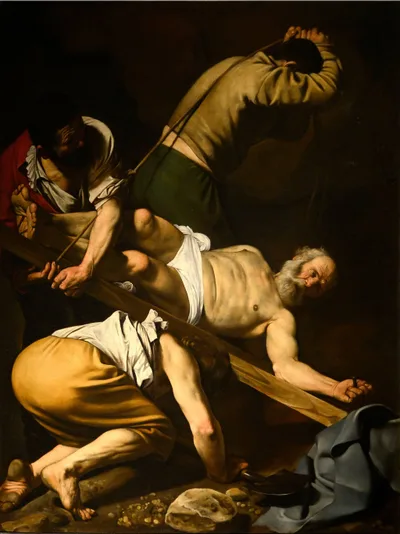
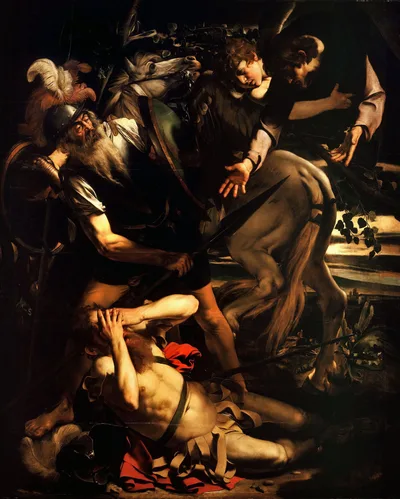
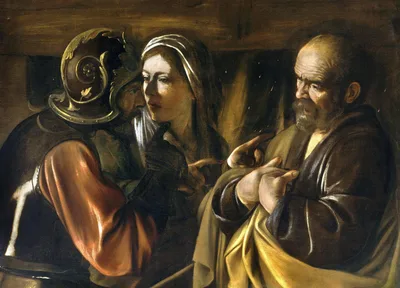
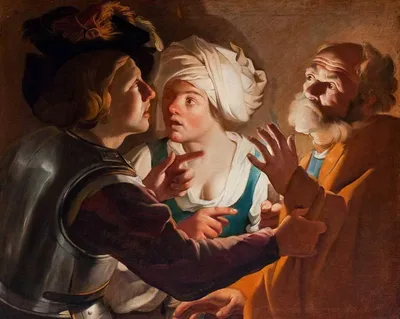
For a narrative painting, record the action and the exact title before looking for a standing saint’s usual attribute. A denial, conversion or imprisonment is a different kind of identification problem from a frontal devotional figure. Compare the museum’s full record with the image, including collection, support and dimensions where available.
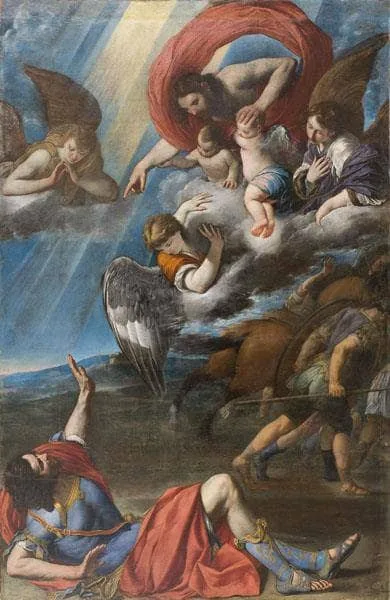
If two paintings share a title, keep their records separate. A correct identification of Paul does not establish which version of a Conversion of Saint Paul is in front of you. Similarly, a general description of Peter’s keys cannot supply missing facts about an individual canvas.