Hand-painted in oil
About this Artwork
An attribute for a state of mind
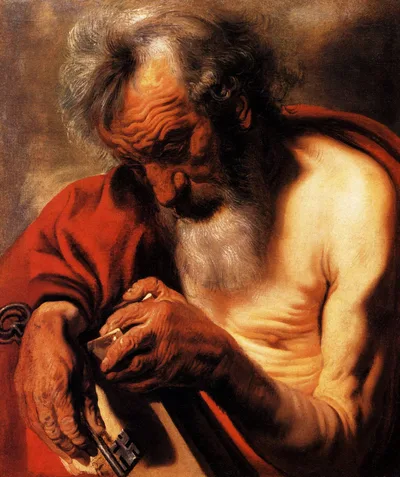
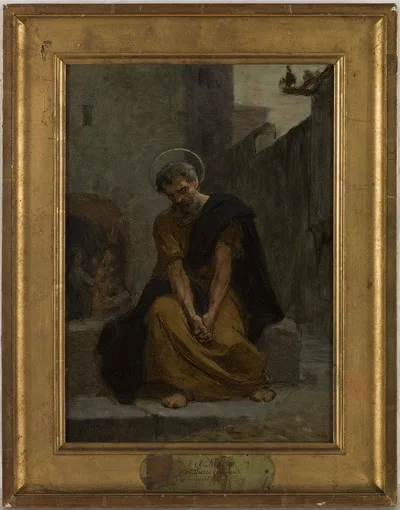
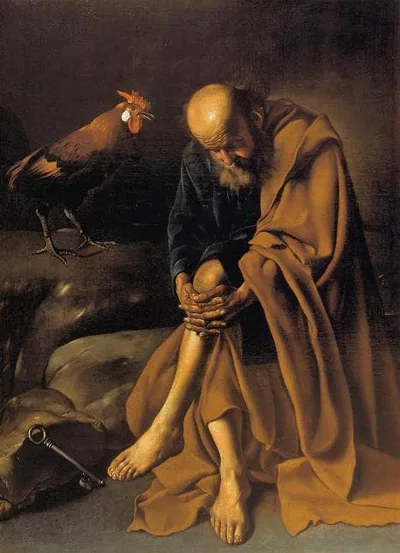
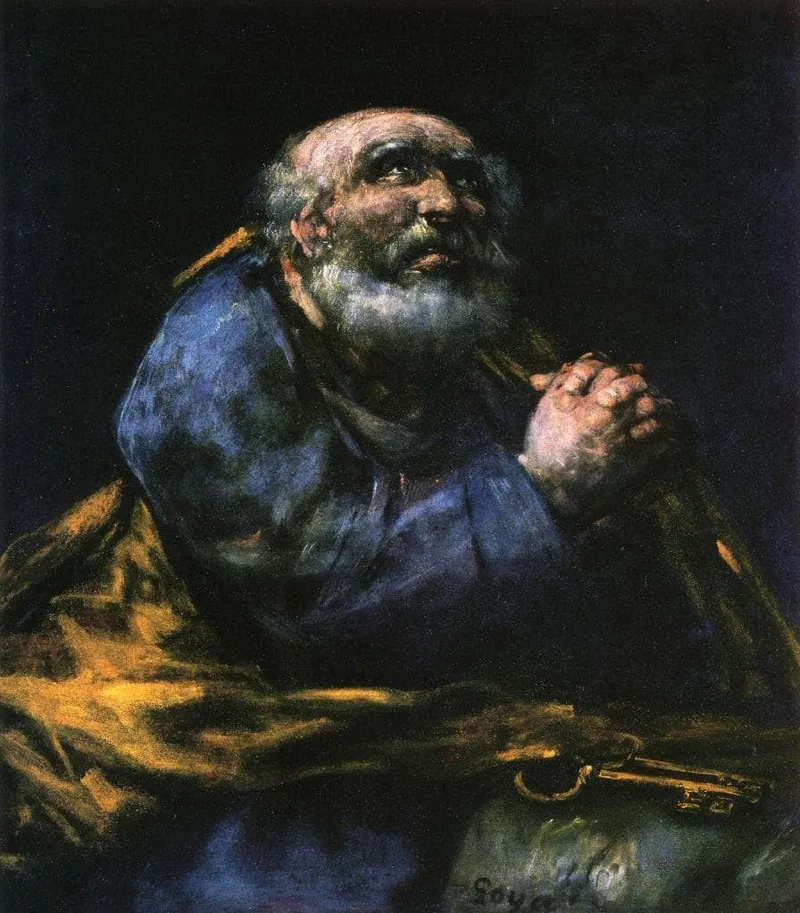
The title names not just the saint but his condition. Peter is identified by keys; the repentant Peter is a subject of its own, drawn from the account of his denial of Christ and the weeping that followed, and painters mark it with upturned eyes and clasped hands rather than with a new object. The keys usually stay, because without them the picture would be a study of an old man in tears. This is one of the places where the attribute is doing plain administrative work: it says who is crying.
What the record holds
The catalogue dates the canvas to 1824 and gives the Phillips Collection in Washington, DC, as its location. The dimensions are 29 x 25.5 cm — very small, roughly the size of a sheet of writing paper. It is filed under male portraiture and Religion, with Romanticism as the style and Spanish as the nationality; the measured colour family is blue.
A late date for an old subject
1824 places this three centuries after the Counter-Reformation pictures that made the weeping Peter a standard subject. The record offers no account of why the artist returned to it, and none is offered here. What the fields do establish is the unusual combination: a devotional subject, a Romantic style label, and a panel small enough to hold in one hand.
Sources
1 references- Goya, Francisco de — Getty ULAN
Spanish painter, 1746-1828