Hand-painted in oil
About this Artwork
The keys
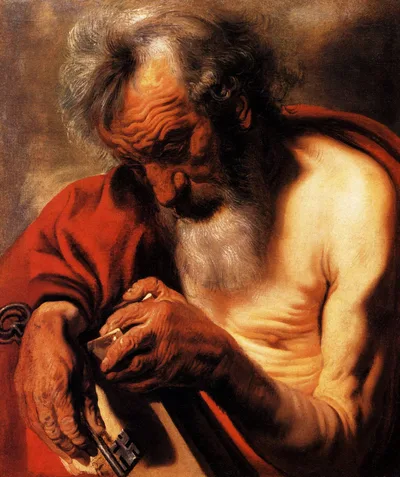
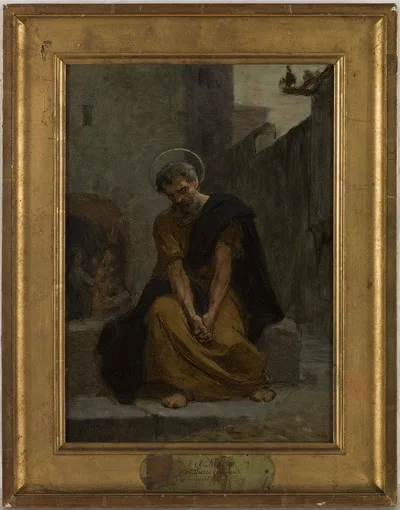
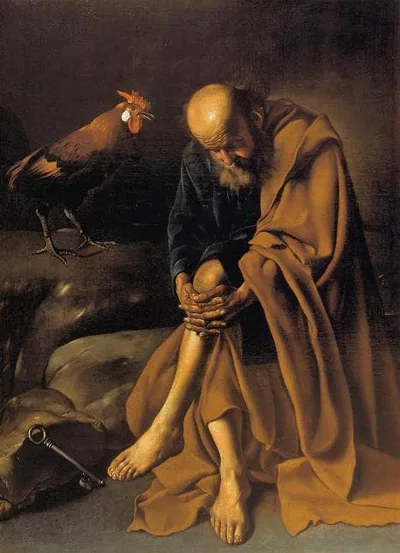
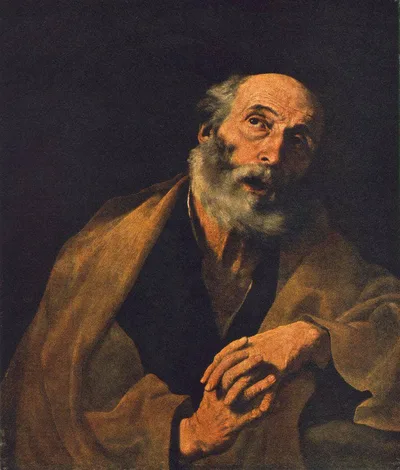
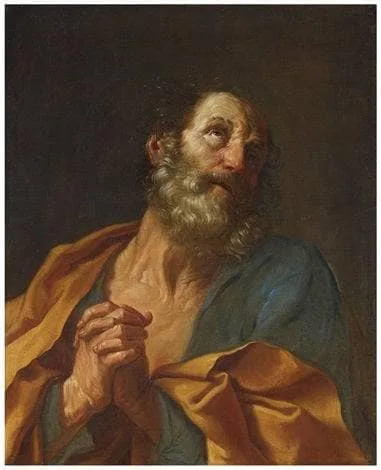
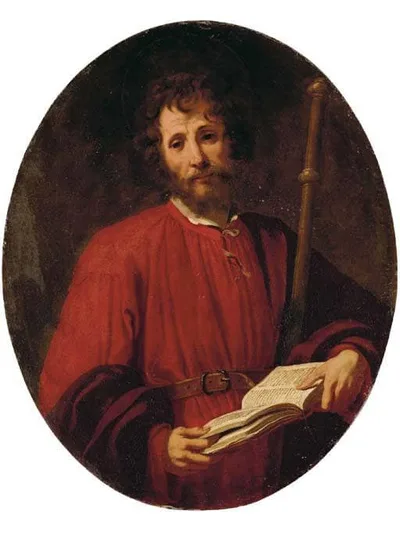
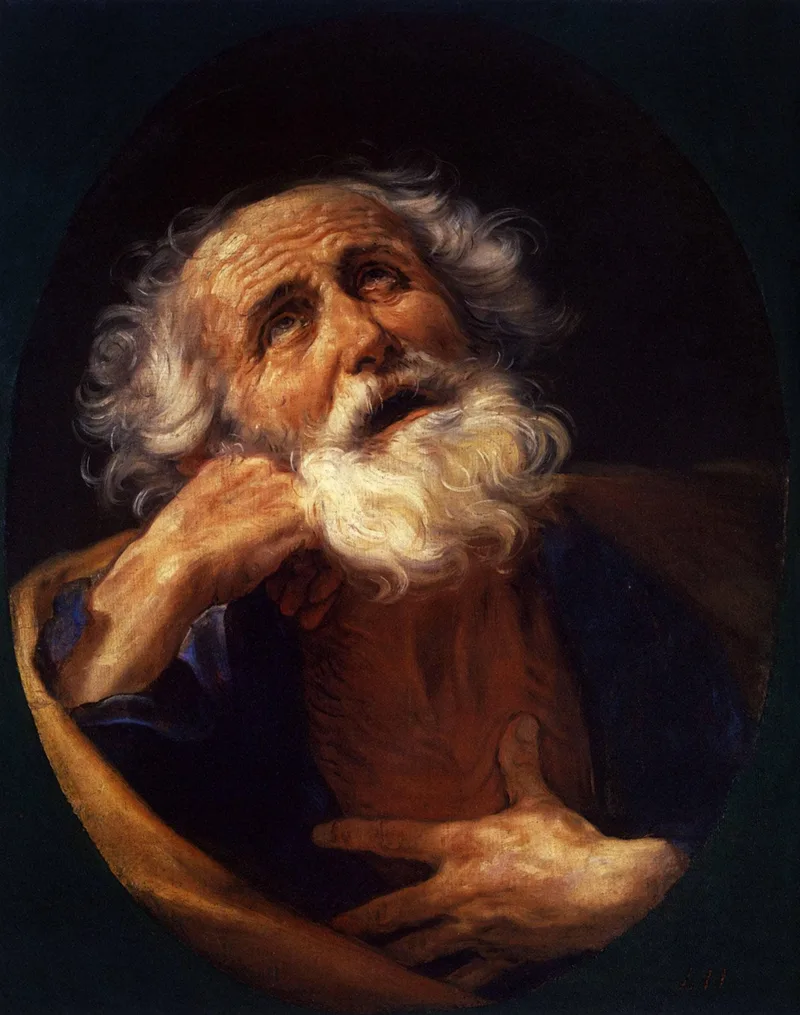
Saint Peter is identified by keys. The convention is one of the most stable in Christian art and derives from a passage in the Gospel of Matthew in which the keys of the kingdom are given to him; painters render them as a pair, often one gold and one silver. Two further signs commonly attach: an inverted cross, from the tradition about his death, and a face type — an older man, bearded, with a broad forehead — which is itself treated as an attribute in the sense that it stays recognisable from picture to picture.
What the record holds
The catalogue dates this work to 1634 and places it at the Museo del Prado in Madrid. The dimensions are 76 x 61 cm, a small upright canvas of the size used for a head-and-shoulders study rather than a scene. It is filed under male portraiture and Religion, with Baroque as the style, and the measured colour family is brown.
A matching pair in the same collection
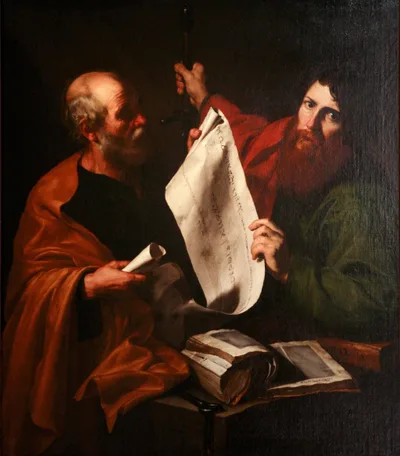
The record also holds a Saint Paul by the same artist, dated the same year, at the same museum, with the identical dimensions of 76 x 61 cm. Peter and Paul are conventionally paired, and the two entries carry the same measurements — a correspondence visible in the catalogue itself, without any claim beyond what the fields say.
Sources
1 references- Reni, Guido — Getty ULAN
Italian painter, draftsman, 1575-1642