Hand-painted in oil
About this Artwork
How the Baptist is signed
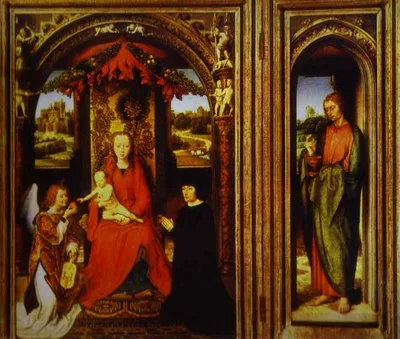
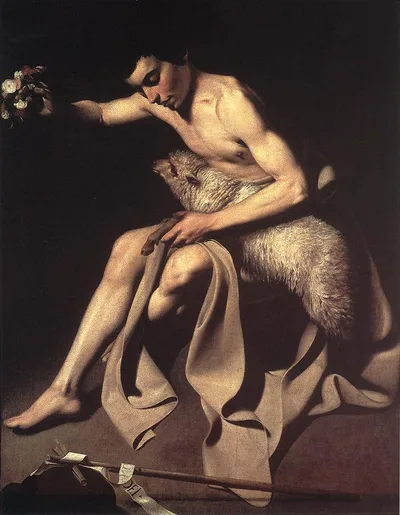
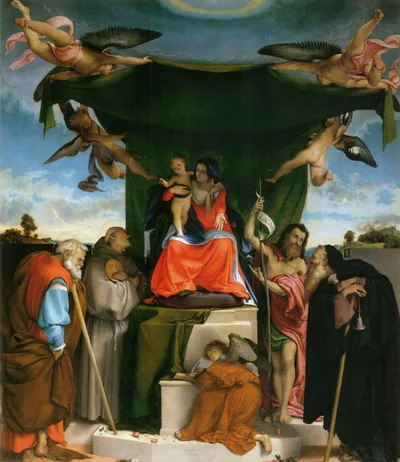
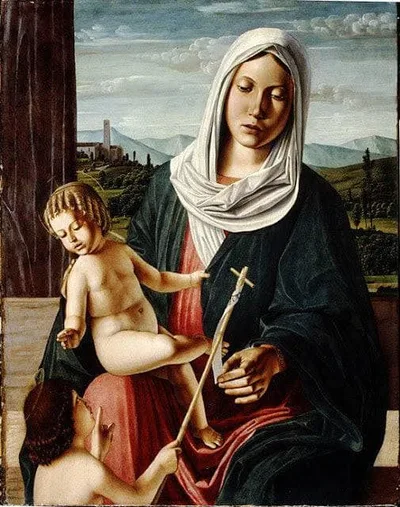
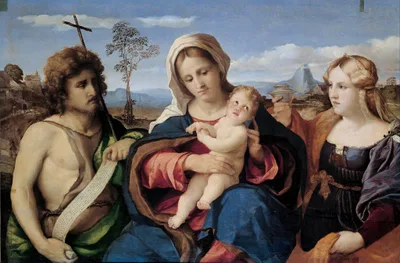
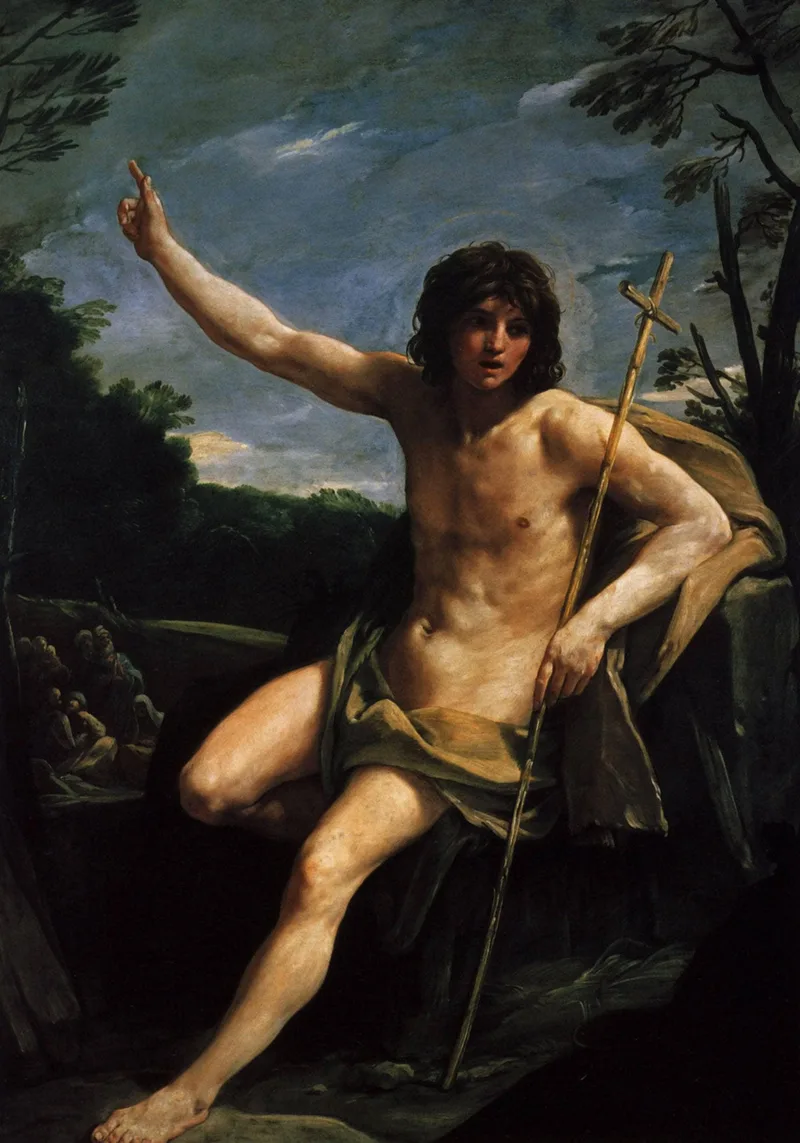
John the Baptist is identified by a cluster of signs rather than a single object: a garment of camel hair or animal skin, a slender cross made of reed, a scroll or banderole carrying the words Ecce Agnus Dei, and a lamb. Each points to a different part of the account given of him — the wilderness, the preaching, the naming of Christ as the lamb. Painters rarely use all four at once; any one of them is sufficient, which is what makes an attribute an attribute.
What the record holds
The entry dates the work to 1637 and gives Dulwich Picture Gallery in London as its location. The dimensions are 225 x 162 cm, an upright canvas well over life size. The catalogue files it under male portraiture, Religion, and also under Fantasy and mythology headings, with Baroque as the style; the measured colour family is blue.
A wilderness saint, painted large
The scale recorded here matters to how the subject reads. At more than two metres high, a figure described by the tradition as living in the desert on locusts and wild honey is placed at the size normally reserved for rulers. The record supplies the measurement; the convention supplies the reason a painter would want it.
Sources
4 references- Reni, Guido — Getty ULAN
Italian painter, draftsman, 1575-1642
- Guido Reni — Wikipedia
Guido Reni (Italian pronunciation: [ˈɡwiːdo ˈrɛːni]; 4 November 1575 – 18 August 1642) was an Italian Baroque painter, although his works showed a classical manner, similar to Simon Vouet, Nicolas Poussin, and Philippe de Champaigne. He pai
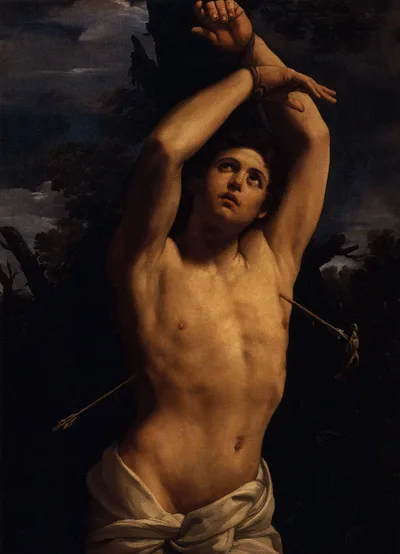
- Saint Sebastian (Reni, Rome) — Wikipedia
Saint Sebastian is a c. 1615 oil on canvas painting by Guido Reni, now in the Capitoline Museums in Rome. It is one of three similar treatments of Saint Sebastian produced by the artist - the others are now in the Palazzo Rosso in Genoa (c.
- Reni-christ-embracing-saint-john-baptist-NG191-fm — Wikimedia Commons
High-resolution image of the work, hosted on Wikimedia Commons.