Hand-painted in oil
About this Artwork
The standard pair
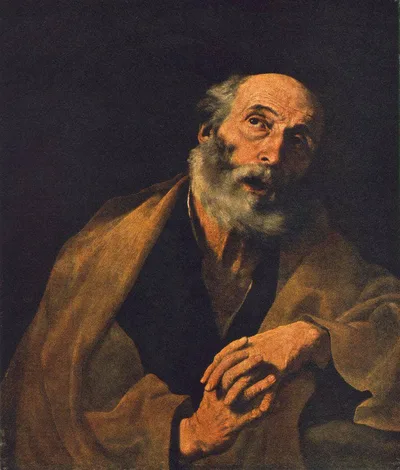
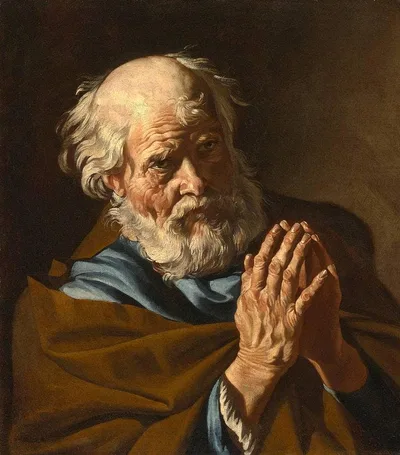
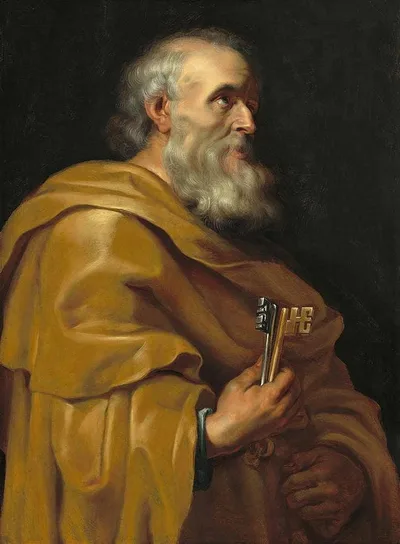
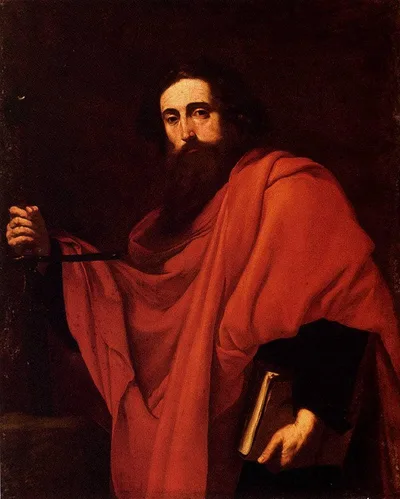
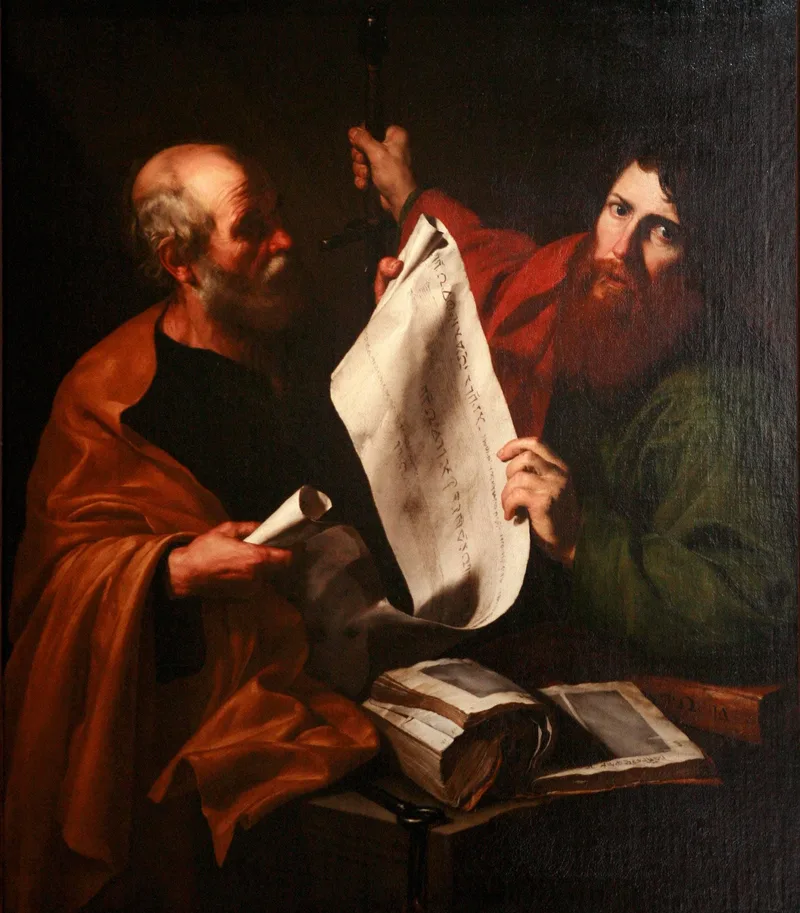
Peter and Paul are the most frequently paired saints in Western art, and the pairing is legible because their attributes do not overlap: keys for Peter, a sword and a book for Paul. Their conventional faces differ as reliably as their objects — Peter grey-bearded and broad-featured, Paul with a high bald forehead and a long dark beard. When both appear in one picture, the two sign systems work as a labelled diptych inside a single frame.
What the record holds
The entry dates the work to 1616 and gives the Musée des Beaux-Arts de Strasbourg in Strasbourg, France, as its location. No dimensions are recorded. The record files it under group portraiture and Religion, with Tenebrism as the style and Spanish as the nationality; the measured colour family is brown.
Why a pair needs no inscription
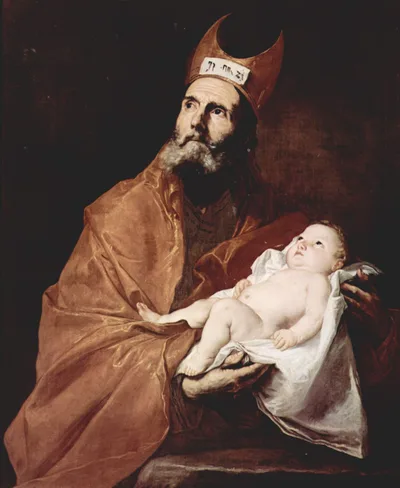
An attribute system earns its keep in exactly this situation. Put two elderly bearded men in a dark picture with no text, and nothing distinguishes them; give one a set of keys and the other a sword, and the identification is instant and has been for centuries. The same collection holds single-figure treatments of both saints by this artist, in another museum and other years — evidence, from the fields alone, of how often the subject was wanted.
Sources
1 references- Ribera, Jusepe de — Getty ULAN
Spanish painter, printmaker, baptized in 1591, died 1652, active in Italy