Hand-painted in oil
About this Artwork
Two saints, two attributes, one canvas
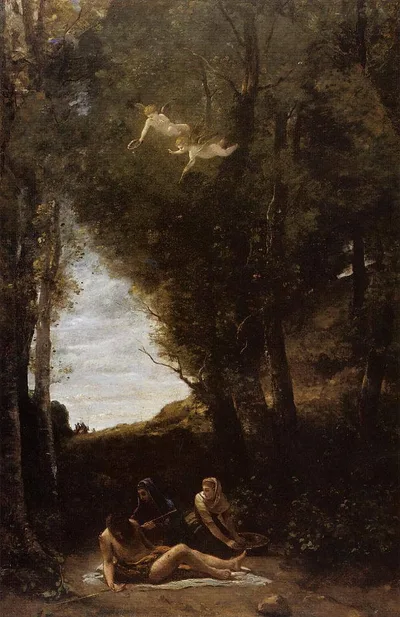
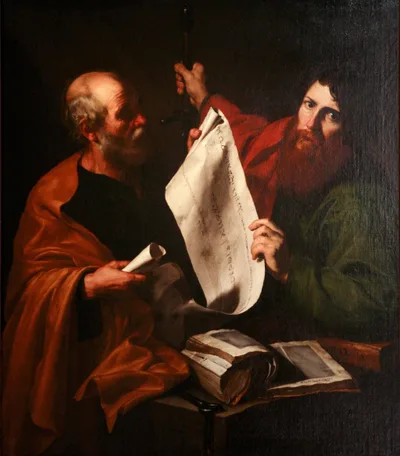
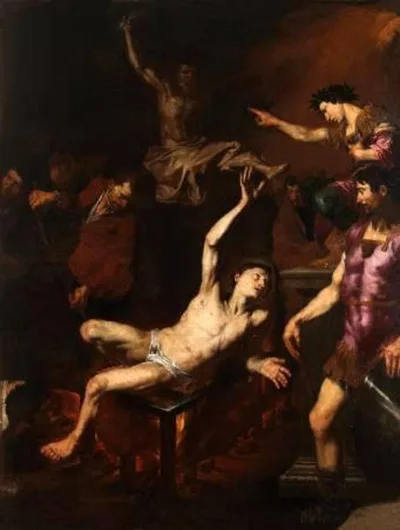
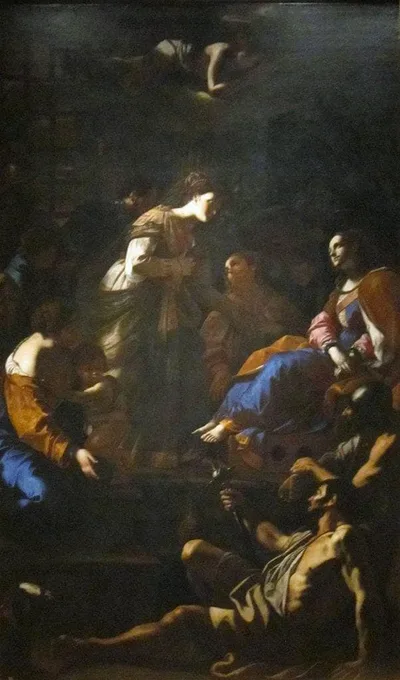
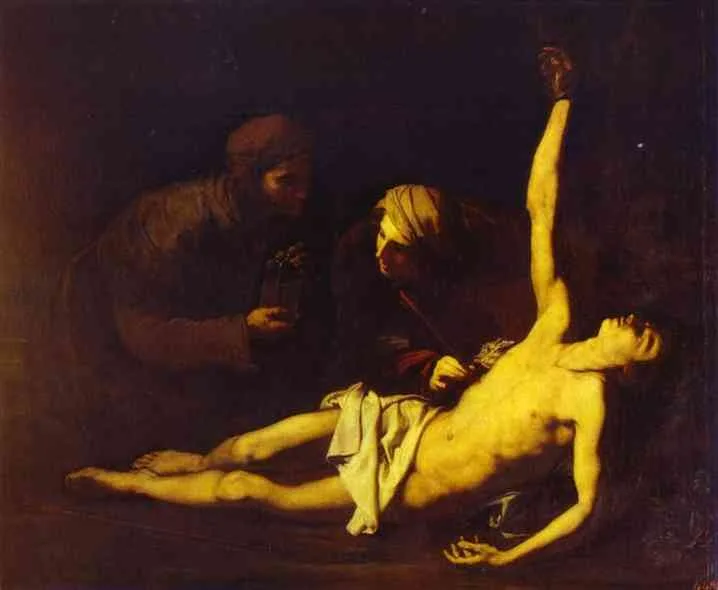
The title names both figures, and each arrives with a different kind of sign. Sebastian is identified by arrows — the most unambiguous attribute in the whole system. Irene of Rome is identified by Sebastian: her place in the tradition is the widow who found him still alive and tended his wounds, and she is recognised in painting by that action rather than by any object she holds. An attribute can be a thing; it can also be a role.
What the record holds
The catalogue dates this canvas to 1628 and gives the Hermitage Museum in Saint Petersburg as its location. The dimensions are 188 x 156 cm — large, and close to square. It is filed under male and female portraiture, Religion and religious cultural heritage, with Tenebrism as the style and Spanish as the nationality. The measured colour families are red and yellow.
Why the episode exists in painting at all
The scene of Irene tending Sebastian gives painters something the plain martyrdom does not: two figures, an action in progress, and a reason for close attention to hands. It is the moment after the arrows and before the ending the legend describes, and choosing it turns a picture of a death into a picture of care. The record fixes the size, the collection and the year; the choice of moment is what the title reports.
Sources
1 references- Ribera, Jusepe de — Getty ULAN
Spanish painter, printmaker, baptized in 1591, died 1652, active in Italy