Hand-painted in oil
About this Artwork
Four names, four objects
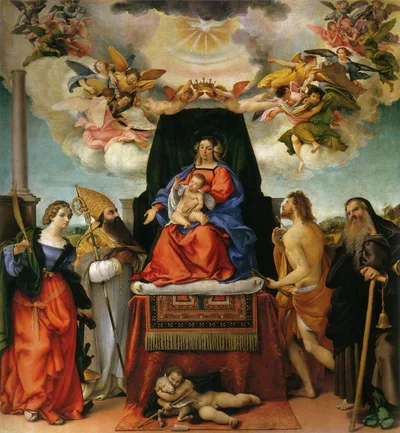
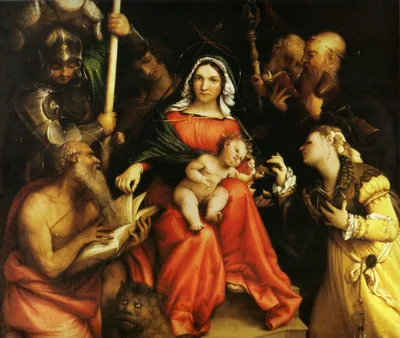
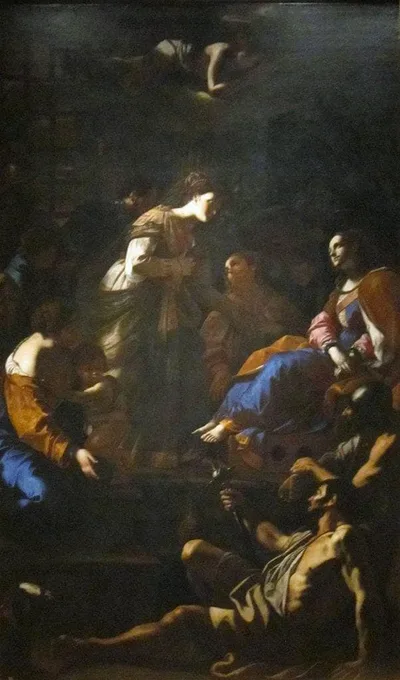
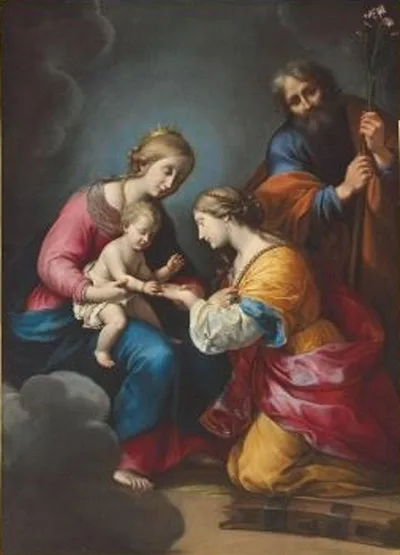
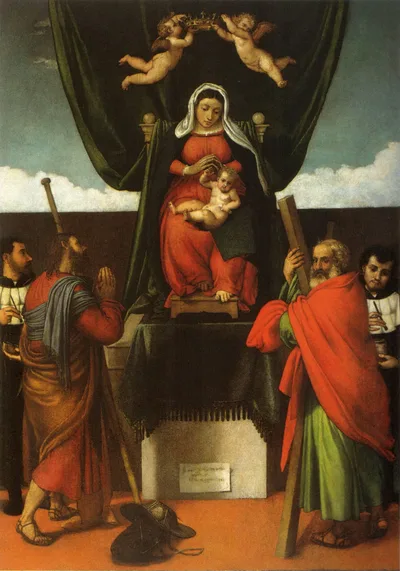
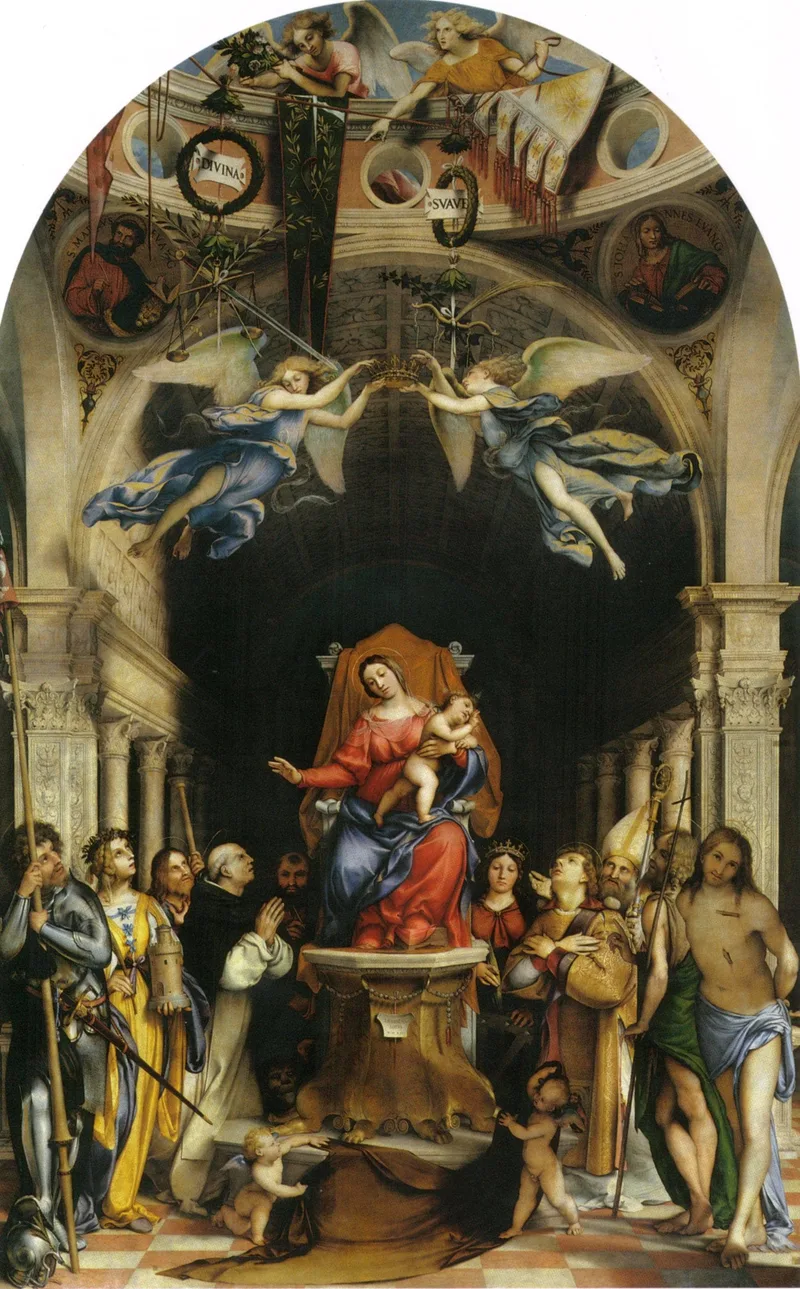
This is the attribute system operating at full strength. The title names four saints, and each arrives with a sign that can be read from the floor of a church: Barbara with a tower, from the legend of her confinement; Roch with a plague wound on the thigh and a dog; Dominic with a lily, a star and a torch-bearing dog; and Alexander of Bergamo, a soldier saint given armour, a banner and a martyr's palm. Nothing about the figures themselves separates them. The objects do all of it.
What the record holds
The catalogue dates the work to 1516 and gives the Accademia Carrara, Bergamo, Italy as its location. The dimensions are 250 x 520 cm — among the largest entries in this collection, and more than twice as wide as it is tall. It is filed under portraiture, Religion, cultural heritage in both headings, and Fantasy, with High Renaissance as the style and Italian as the nationality; the measured colour family is brown.
Why the width matters
A panel of that proportion is a row. It puts the saints side by side rather than stacked, at a distance from which faces are approximate and objects are not. That is the practical case for the whole convention: at the far end of a nave, a tower is legible and an expression is not.
Sources
1 references- Lotto, Lorenzo — Getty ULAN
Italian painter, ca. 1480-1556