Hand-painted in oil
About this Artwork
The lion, and why it follows him
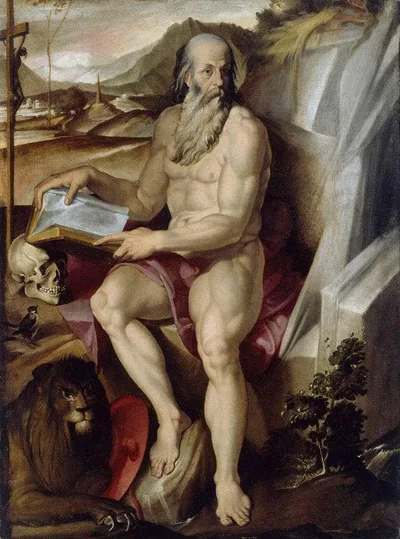
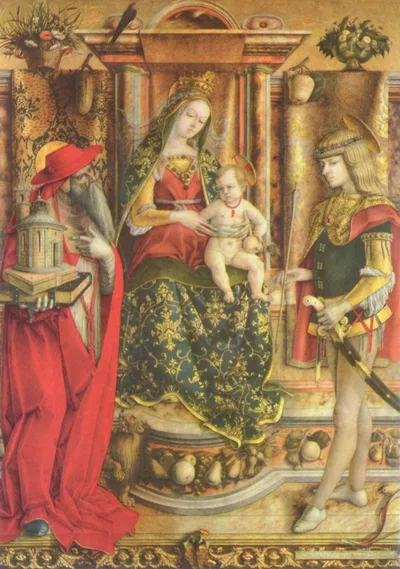
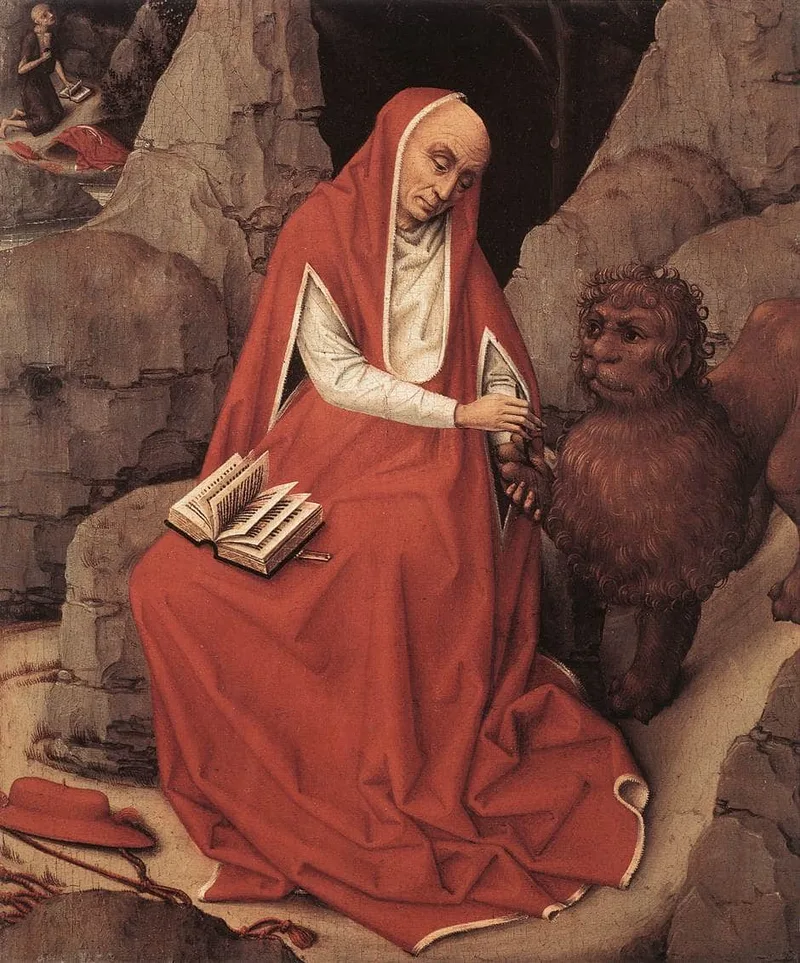
Saint Jerome is the rare scholar-saint who comes with an animal. The lion is attached to him by a legend in which he removes a thorn from its paw and the beast stays with him afterwards, tame. It is the most immediately visible of his attributes; the others — the book, the pen, the skull, the red cardinal's hat — belong to the desk. The title of this work names the lion outright, which is as explicit as attribution by attribute ever gets.
What the record holds
The catalogue dates the work to 1450 and gives the Detroit Institute of Arts, Detroit, Michigan, as the collection. No dimensions are recorded in this entry. It is filed under Religion and religious cultural heritage, with Northern Renaissance as the style and Flemish as the nationality; the measured colour family is red.
A northern Jerome
The style and nationality fields matter for a subject that also had a strong Italian tradition. Northern Renaissance painting is characterised by oil handling built up in thin glazes, a high level of finish in small detail, and interiors described object by object. Under that method the lion becomes a described animal in a described room rather than a symbol placed on a plain ground.
Sources
1 references- Weyden, Rogier Van Der, School of — Getty ULAN
Unknown artist