Hand-painted in oil
About this Artwork
The title states the method
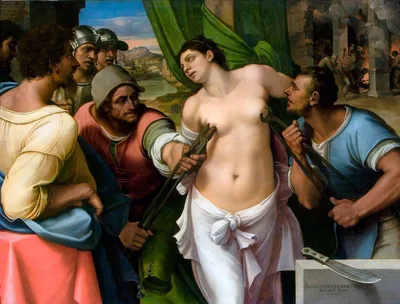
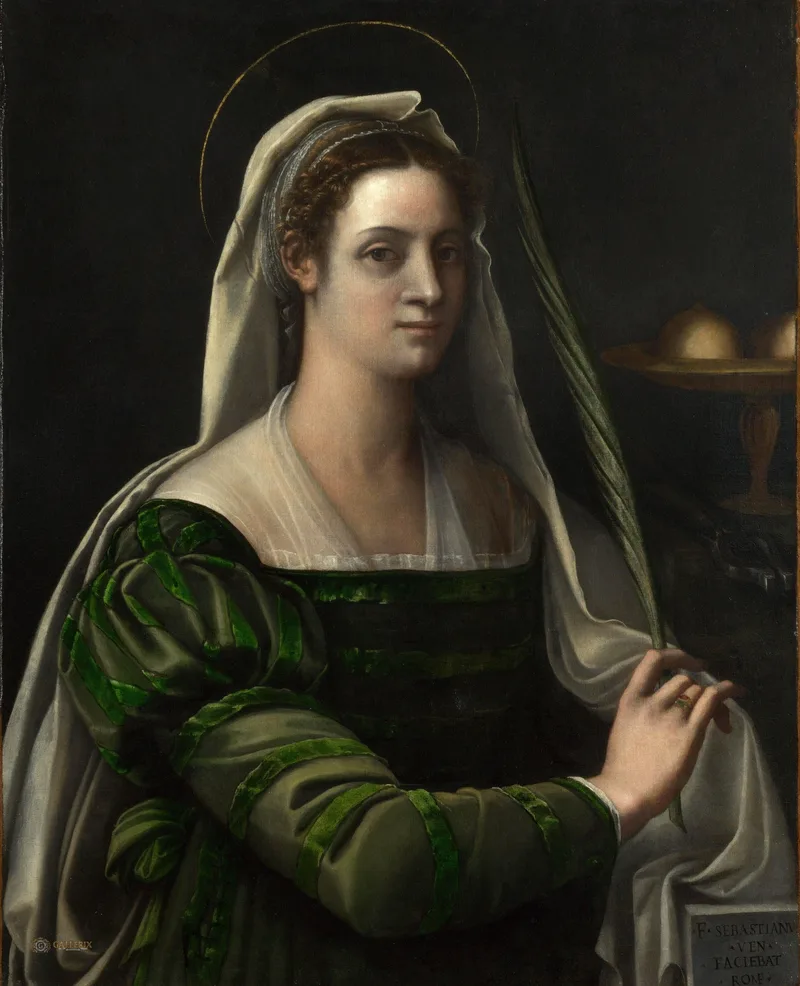
No entry in this catalogue is more explicit about how the system works. It does not call the sitter a saint. It calls her a lady, and says she is shown with the attributes of one — which concedes, in the title itself, that the objects are detachable, lendable, and capable of naming someone they do not belong to. Agatha's signs are among the harshest in the calendar: shears or pincers, a dish, a martyr's palm, a veil. Borrowed for a portrait, they become costume, and the picture is a likeness wearing a legend.
What the record holds
The catalogue dates the work to 1535 and gives the National Gallery, London, UK as its location. No dimensions are recorded in this entry. It is filed under female portraiture — and under nothing else; there is no religious category at all. The style is given as Mannerism Late Renaissance and the nationality as Italian; the measured colour family is yellow.
Both Agathas here belong to one painter
2 titles in this catalogue carry the name, and both are by this artist: this portrait in the guise of the saint, and a martyrdom. The two are opposite uses of the same set of objects — in one they identify the woman they were assigned to, and in the other they identify a woman who is not her.
Sources
1 references- Sebastiano del Piombo — Getty ULAN
Italian painter and draftsman, born ca. 1485, died 1547