Hand-painted in oil
About this Artwork
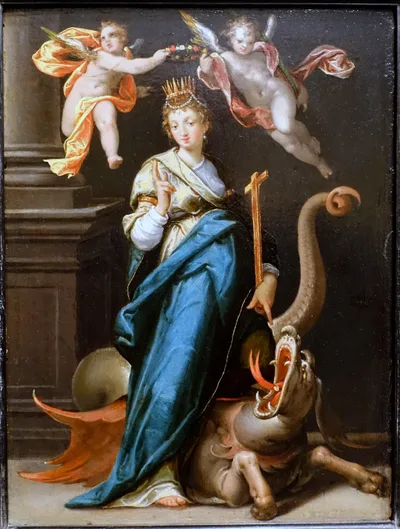
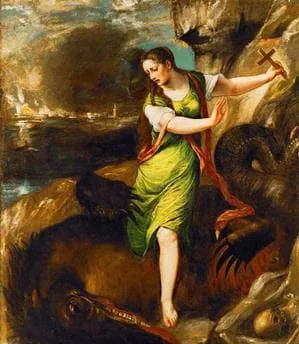
Margaret, and the dragon she shares
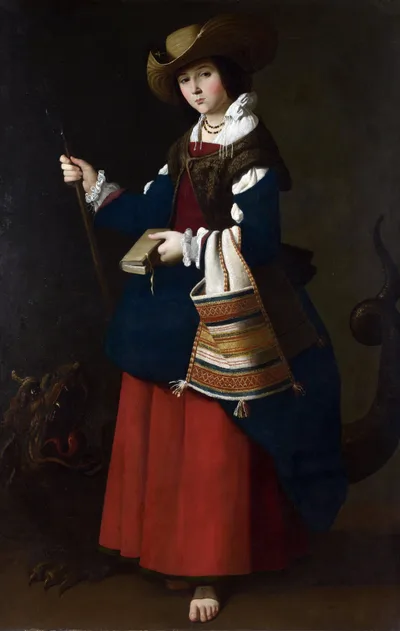
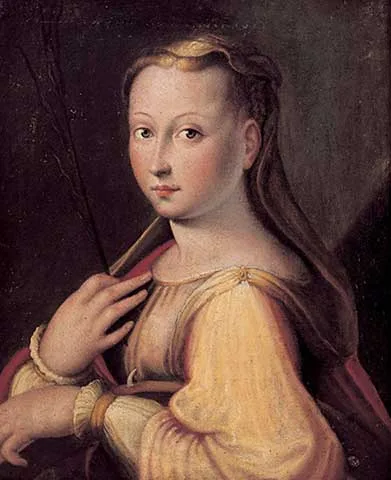
A dragon in a picture does not automatically mean Saint George. Saint Margaret of Antioch is also identified by one, and the two are told apart by who is holding it: George is armoured and mounted and kills the beast with a lance; Margaret is a young woman, unarmed, who according to her legend is swallowed and emerges intact, and is shown standing above or stepping out of the creature, sometimes with a cross in hand. The title of this work names both the saint and the attribute, which removes the ambiguity before the picture is even seen.
What the record holds
The catalogue gives 1565 as the date of creation and the Museo del Prado in Madrid as the location. No dimensions are recorded in this entry — a blank the record leaves open rather than fills. It is filed under female portraiture, Religion and mythological cultural heritage, with Mannerism Late Renaissance as the style. The measured colour families are brown and yellow.
Why a dragon is filed under mythology
The record's mythology tag is a cataloguing decision, not a verdict on belief. Hagiographic legend and classical myth share the same visual furniture — monsters, ordeals, deliverances — and a subject index built for a whole collection has to put a dragon somewhere.
Sources
1 references- Peale, Titian Ramsay — Getty ULAN
American painter and naturalist, 1799-1885