Hand-painted in oil
About this Artwork
Arrows, at the end of the century
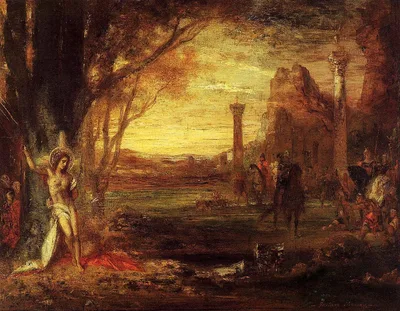
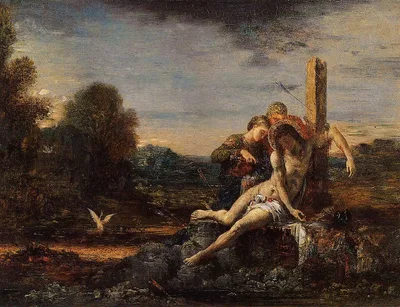
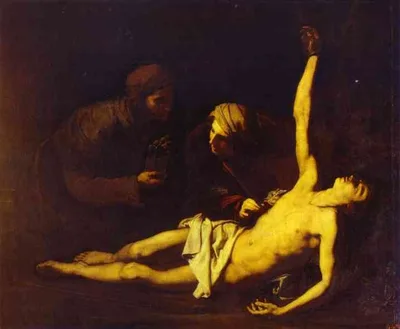
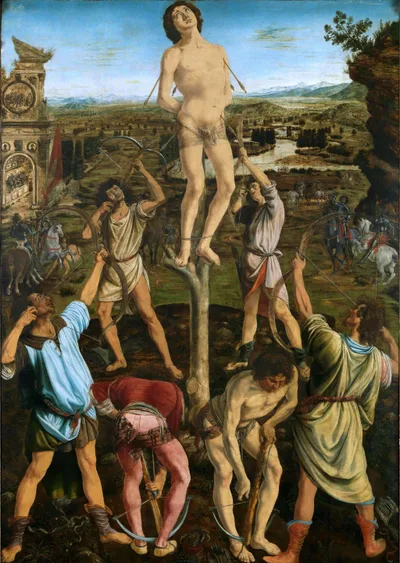
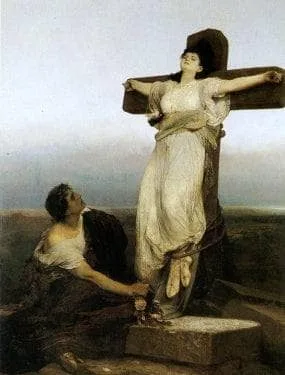
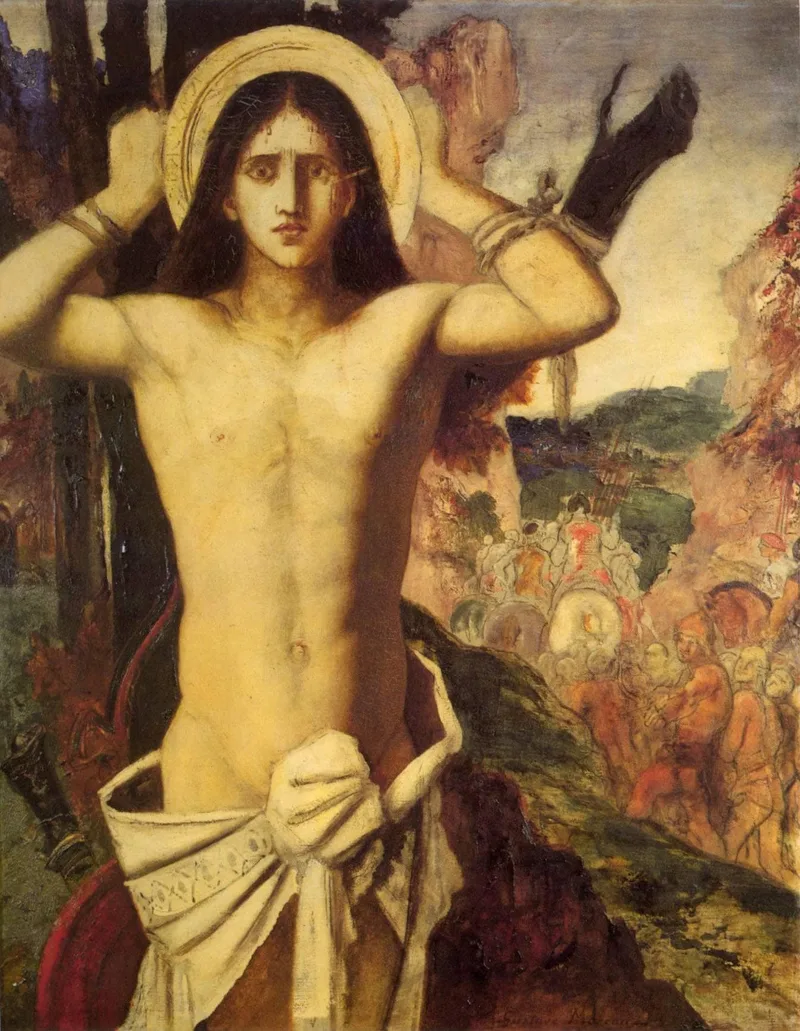
Sebastian is named by arrows, and the sign is old enough and fixed enough that a painter working in the 1870s inherits it whole. That inheritance is the interesting part. By then the subject had been painted for four centuries and carried its own accumulated weight — the bound body, the tree or column, the arrows that by legend did not kill him — so a late treatment is working with a convention rather than establishing one.
What the record holds
The catalogue dates the work to 1875 and gives the Musée National Gustave Moreau in Paris as its location — the museum devoted to this artist. The dimensions are 90 x 115 cm, wider than tall. The record files it under Religion, Fantasy, and mythological and religious cultural heritage, with Symbolism as the style and French as the nationality; the measured colour families are ochre and yellow.
What Symbolism means here
Symbolism, the style term on this entry, names a late nineteenth-century tendency that preferred suggestion to statement and treated subjects from religion and myth as material for interior states rather than as narrative to be reported. Applied to a martyrdom, the effect is a shift of purpose: the arrows still identify the saint, but they are no longer there to tell you what happened.
Sources
1 references- Musée Gustave Moreau — Getty ULAN
French repository, Paris, contemporary