Hand-painted in oil
About this Artwork
Roch, and the wound he shows
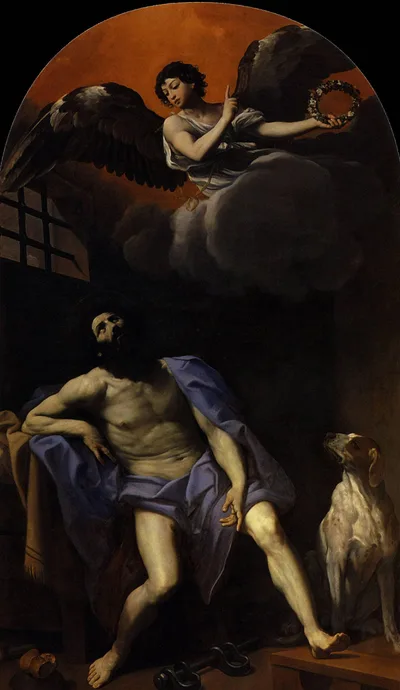
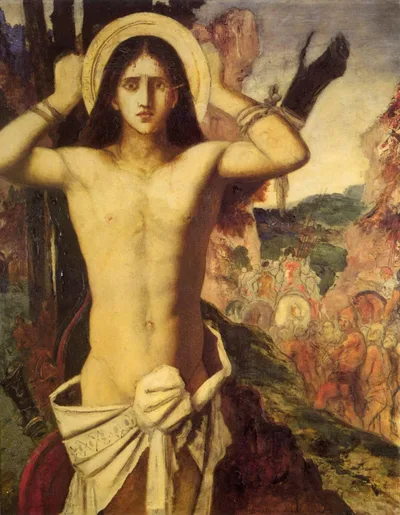
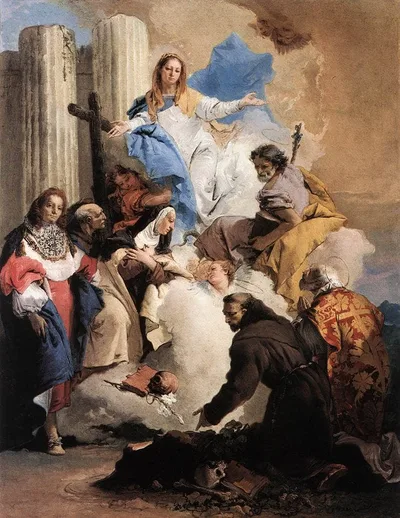
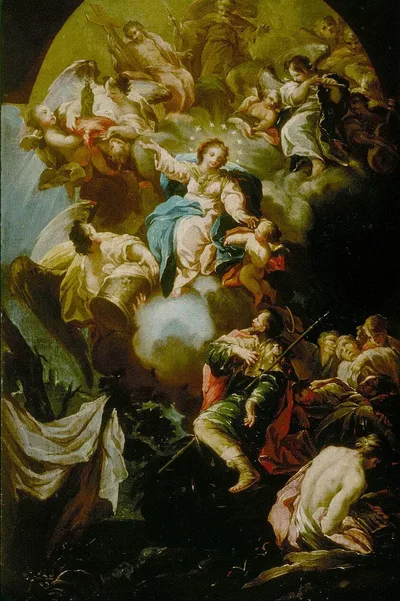
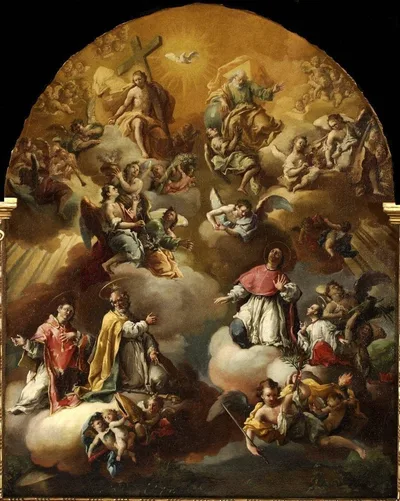
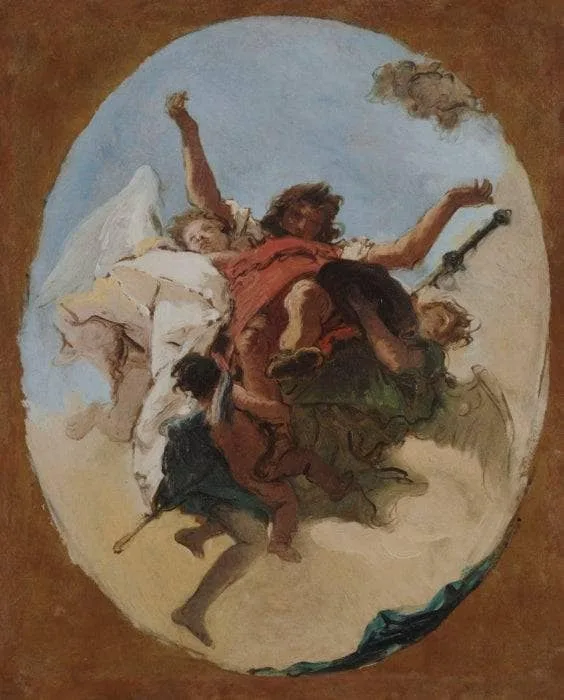
Roch is named by a plague sore. The convention has him lift the hem of his garment to reveal a mark on the thigh, and the gesture is so fixed that it substitutes for an inscription. Around it the tradition supplies a pilgrim's kit — staff, broad hat, a scallop shell — and a dog carrying bread, from the account of the animal that fed him. An apotheosis subject raises the whole set: the figure goes up, and the attributes go with him, which is the only way a sign of illness can survive a picture about glory.
What the record holds
The catalogue dates the work to 1745 and gives the Yale University Art Gallery (Yale University), New Haven, CT, US as its location. No dimensions are recorded in this entry. It is filed under Religion, cultural heritage and mythological cultural heritage, and Fantasy, with Rococo as the style and Italian as the nationality; the measured colour family is ochre.
Why the Fantasy tag is there
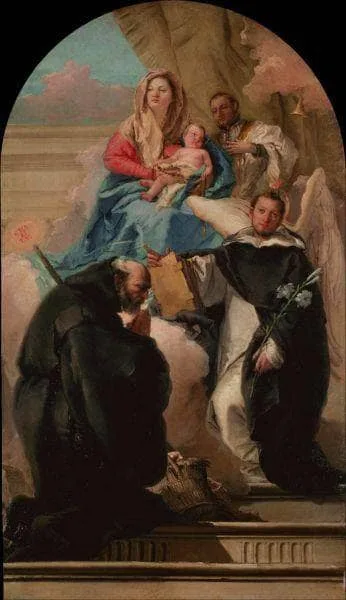
An index that records what a picture contains needs a heading for figures with wings, and an apotheosis requires them. The tag is a description of the cast, not a judgement on the subject. 3 titles in this catalogue carry the name Roch, one of them inside a polyptych where he stands among three other named saints — the same wound, doing the same work, at a fraction of the scale.
Sources
1 references- Tiepolo, Giovanni Battista — Getty ULAN
Venetian painter, 1696-1770