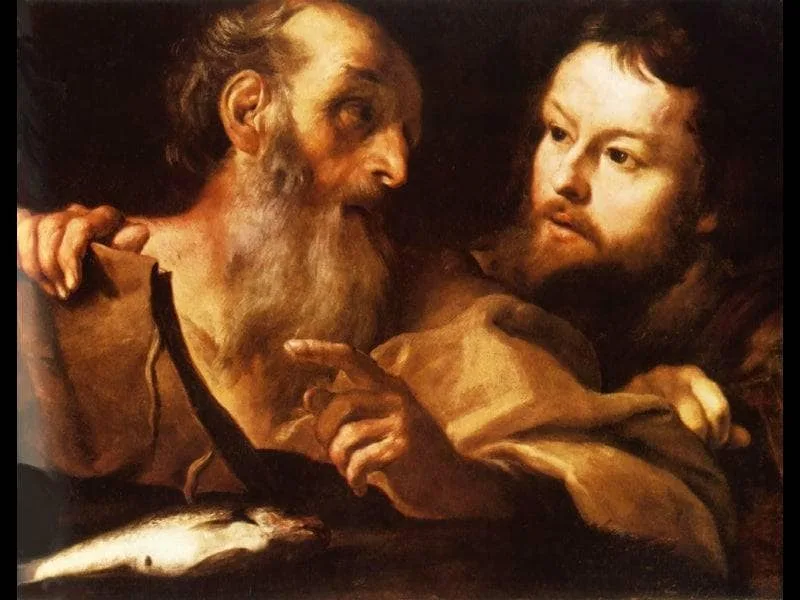
Hand-painted in oil
About this Artwork
Two apostles, told apart by weapons
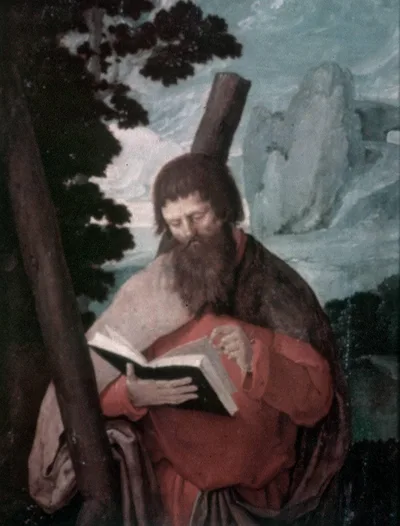
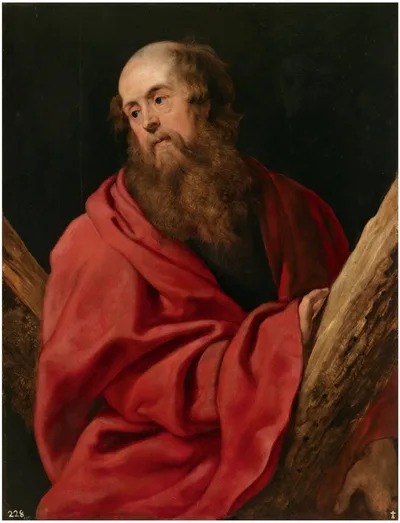
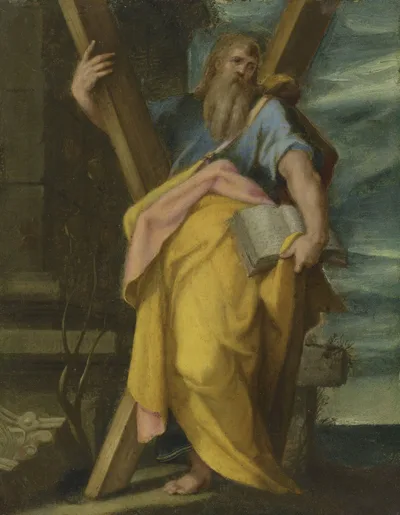
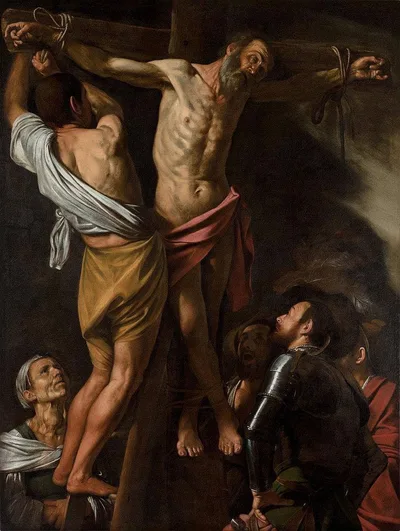
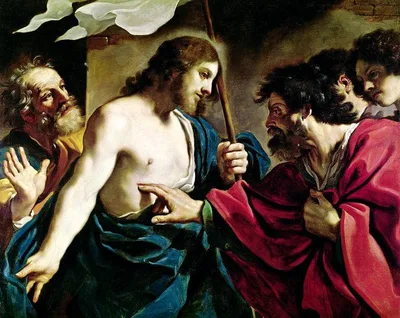
Andrew is identified by an X-shaped cross, the saltire, from the tradition about the manner of his death; the shape is distinctive enough that it names him even at a distance, and it survives today as a flag. Thomas is identified by a lance or pike and by a carpenter's square. Both attributes are instruments — one of death, one of trade — and in a picture holding both apostles they are what keeps two bearded men from becoming the same man.
What the record holds
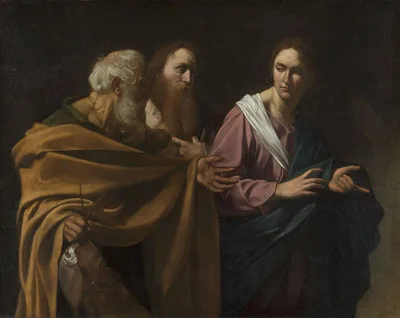
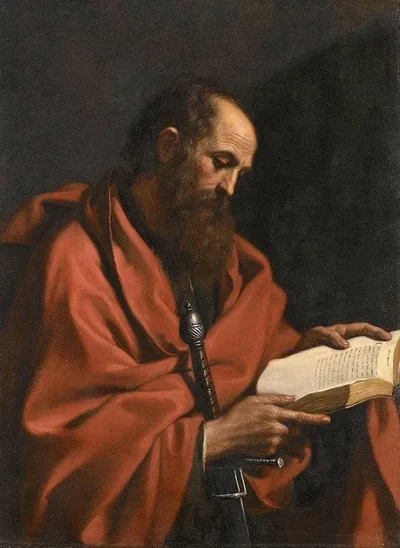
The catalogue dates this canvas to 1627 and gives the National Gallery in London as its location. The dimensions are 76 x 59 cm, a small upright. It is filed under male portraiture and Religion, with Baroque as the style and Italian as the nationality; the measured colour family is brown.
A conversation piece
Two half-length figures at this size make a particular kind of image: close, without setting, and turned toward each other rather than toward the viewer. The tradition supplies a reason for pairing these two in particular, since Thomas is remembered for demanding evidence, which gives any picture of him with a companion an implied subject — one man asking, another answering. The record establishes the size, the year and the collection; the rest is what the attributes make legible.
Sources
1 references- Bernini, Gian Lorenzo — Getty ULAN
Italian sculptor, architect, 1598-1680