Hand-painted in oil
About this Artwork
When the attribute is the saint
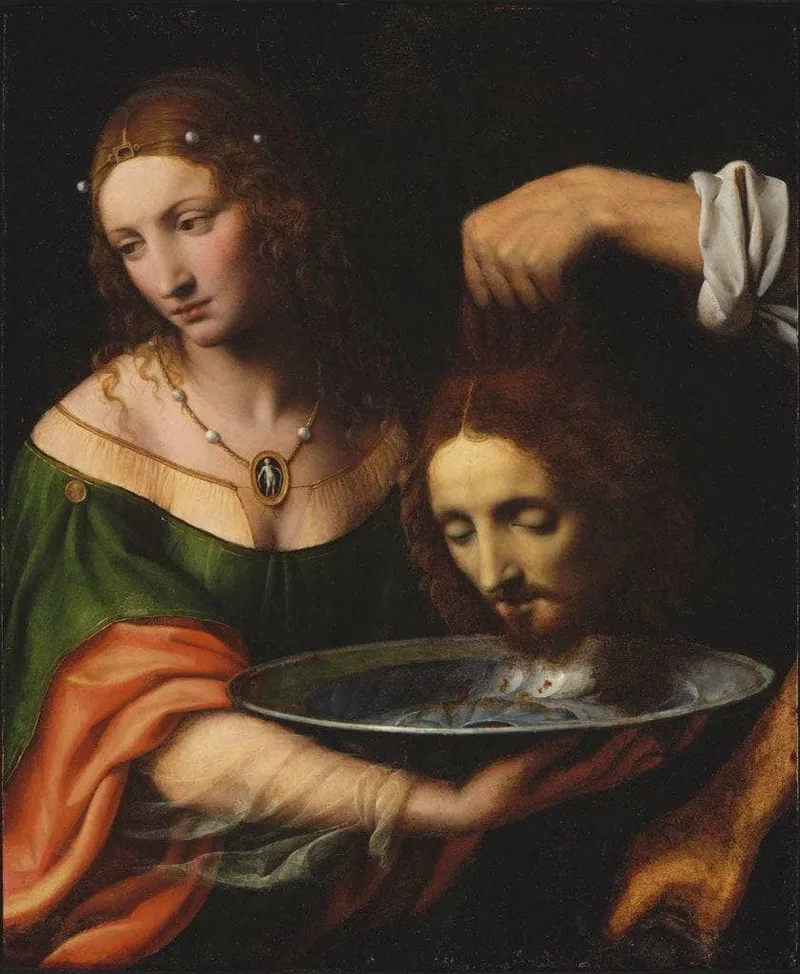
This is the strangest case in the whole grammar of saintly signs. John the Baptist is normally identified by camel hair, a reed cross, a lamb. In the Salome subject he is identified by his own severed head on a dish, and the head is not an attribute the saint carries — it is what remains of him, held by someone else. The dish, the charger, is the fixed element: wherever a young woman carries a head on a platter, the tradition reads Salome, and the head is named by association.
What the record holds
The catalogue dates the panel to 1525 and gives the Museum of Fine Arts, Boston, as the collection. Its dimensions are 62.23 x 51.43 cm, a small upright. It is filed under female portraiture and religious cultural heritage, with High Renaissance as the style and Italian as the nationality; the measured colour family is brown.
Where it sits in the Baptist's story
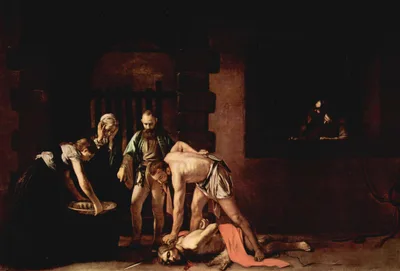
The account in the Gospels places this at the end: the dance, the request, the execution in prison. In a collection organised around saints, the picture is therefore filed under the Baptist's name while showing almost nothing of the man — a reminder that the naming system is indifferent to whether the saint is present, conscious, or alive.
Sources
1 references- Luini, Bernardino — Getty ULAN
Italian painter and draftsman, ca. 1480-ca. 1532